

2026 Maternity Equipment Checklist for Clinics and Hospitals in Kenya
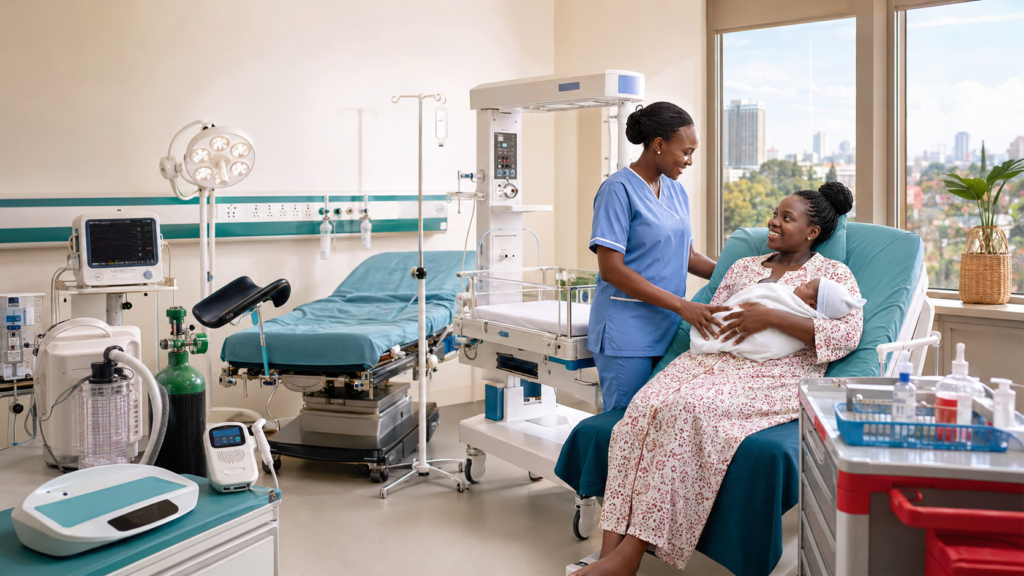
A safe maternity unit is not defined by the number of machines it owns. It is defined by whether the right equipment is available, functional and within reach when a mother or newborn needs urgent care.
For Kenyan clinics, maternity homes and hospitals, preparing for 2026 means looking beyond basic compliance. Facilities need equipment that supports routine antenatal care, safe delivery, early detection of complications, newborn resuscitation, infection prevention and timely referral.
Whether you are opening a maternity wing, upgrading an existing facility or preparing an annual procurement budget, this maternity equipment checklist will help you identify what your facility genuinely needs.
Why Maternity Equipment Planning Matters in 2026
Maternal and newborn emergencies can develop quickly. Postpartum haemorrhage, pre-eclampsia, fetal distress, birth asphyxia and neonatal hypothermia require an immediate, coordinated response.
Kenya’s Basic Obstetric Protocols 2026 provide current evidence-based guidance for health professionals, while the World Health Organization emphasises that childbirth and newborn-resuscitation equipment should be functional, organised and immediately accessible.
Equipment availability alone, however, is not enough. Every facility should ask:
- Is the equipment appropriate for our level of care?
- Is it functional and regularly maintained?
- Are staff trained to use it?
- Are compatible accessories and consumables available?
- Can the equipment operate during a power interruption?
- Is there a documented referral plan when advanced care is required?
The ideal maternity setup combines equipment, trained personnel, reliable supplies, good maintenance and clear clinical protocols.
1. Antenatal Examination Equipment
Antenatal care helps clinicians assess the health of the mother, monitor fetal development and identify high-risk pregnancies early.
Essential antenatal equipment includes:
- Examination couch with steps
- Fetal Doppler
- Fetoscope or Pinard stethoscope
- Adult weighing scale
- Height-measuring device
- Blood-pressure machine with suitable cuff sizes
- Stethoscope
- Pulse oximeter
- Digital thermometer
- Measuring tape
- Examination light
- Glucometer
- Urine specimen containers and testing supplies
- Privacy screen
- Diagnostic ultrasound machine, where appropriate
- Patient stools, clinician chairs and storage cabinets
Blood-pressure monitoring deserves particular attention. A reliable sphygmomanometer and properly fitting cuffs help clinicians identify hypertension during pregnancy and respond appropriately to possible pre-eclampsia.
Facilities offering obstetric ultrasound should also ensure that the machine is operated by appropriately trained personnel and supported by dependable servicing, compatible probes and safe power protection.
2. Labour-Monitoring Equipment
Good labour monitoring allows the maternity team to follow the progress of labour and recognise maternal or fetal deterioration before it becomes an emergency.
The labour room should have:
- Fetal Doppler or fetal heart-rate monitor
- Fetoscope
- Blood-pressure machine
- Stethoscope
- Pulse oximeter
- Digital thermometer
- Wall clock with a visible second hand
- Examination light
- Glucometer
- Partograph documentation materials
- IV stands
- Infusion pumps, depending on the facility’s level
- Patient monitor for higher-level facilities
- Emergency call bell or communication system
The layout matters almost as much as the equipment. Frequently used devices should be kept close to the patient, while emergency equipment must remain clearly labelled and unobstructed.
3. Delivery-Room Equipment
The delivery room should be warm, private, easy to clean and organised for both routine childbirth and unexpected emergencies.
Core delivery equipment
- Adjustable delivery bed
- Delivery mattress with waterproof covering
- Delivery stool, where offered
- Instrument trolley
- Mayo table
- Procedure light or mobile examination light
- IV infusion stands
- Step stool
- Stainless-steel bowls and kidney dishes
- Linen trolley
- Covered waste bins with appropriate liners
- Sharps containers
- Privacy screens or curtains
- Wall-mounted or portable suction machine
- Reliable oxygen source with flowmeter
- Adult resuscitation bag and masks
- Emergency or crash cart
Delivery instruments and supplies
- Sterile delivery sets
- Cord clamps
- Umbilical-cord scissors
- Episiotomy scissors
- Artery forceps
- Sponge-holding forceps
- Needle holders
- Suturing instruments
- Vaginal speculums
- Sterile gloves
- Gynaecological gloves
- Disposable examination gloves
- Sterile drapes
- Absorbent pads
- Gauze, cotton wool and dressing materials
Reusable instruments should only be purchased when the facility has a reliable system for cleaning, packaging, sterilisation, storage and traceability.
4. Maternal Emergency and Resuscitation Equipment
A maternity emergency trolley should be ready for immediate use—not locked in a store or shared with a distant department.
Recommended emergency equipment includes:
- Clearly labelled resuscitation trolley
- Adult bag-valve mask
- Oxygen masks and nasal cannulas
- Portable or central oxygen supply
- Suction machine and tubing
- Oropharyngeal airways
- Laryngoscope
- Endotracheal tubes
- Pulse oximeter
- Defibrillator for appropriately equipped hospitals
- ECG machine or multiparameter patient monitor
- IV cannulas and administration sets
- Pressure infusion device
- Infusion and syringe pumps
- Emergency procedure trays
- Portable examination light
- Functional communication equipment for calling additional help
Emergency medicines should be managed separately according to approved clinical protocols, storage requirements and facility policy.
A nominated staff member should check the emergency trolley at the beginning of every shift. Oxygen levels, seals, batteries, expiry dates, suction performance and the availability of consumables should be recorded.
5. Newborn Care and Resuscitation Equipment
Every delivery area should be prepared to support a newborn who does not begin breathing normally after birth. The World Health Organization recommends having checked resuscitation equipment close to the delivery bed before childbirth begins.
Essential newborn equipment includes:
- Newborn resuscitation table
- Radiant infant warmer
- Neonatal bag-valve resuscitator
- Size 0 and size 1 neonatal masks
- Newborn suction device
- Neonatal suction catheters
- Oxygen source with an appropriate flow-control system
- Neonatal pulse oximeter and probes
- Infant stethoscope
- Digital thermometer
- Newborn weighing scale
- Infant measuring mat
- Head-circumference measuring tape
- Warm, clean towels and baby wraps
- Identification bands
- Cord clamps
- Neonatal laryngoscope and airway equipment for facilities with trained personnel
WHO guidance highlights essential newborn care such as thermal protection, assessment of breathing, resuscitation when required, skin-to-skin contact and breastfeeding support.
A radiant warmer should therefore complement—not unnecessarily replace—immediate drying and skin-to-skin care for stable newborns.
6. Equipment for Small and Sick Newborns
Facilities offering neonatal observation, special-care baby services or advanced newborn care need additional equipment based on their approved service level.
This may include:
- Neonatal incubators
- Additional radiant warmers
- Phototherapy units
- Neonatal patient monitors
- Oxygen concentrators
- Oxygen cylinders with regulators
- Neonatal CPAP system
- Apnoea monitors
- Neonatal infusion pumps
- Syringe pumps
- Infant resuscitation equipment
- Neonatal suction apparatus
- Glucometer
- Bilirubin-measurement equipment
- Breast pumps
- Milk storage refrigerator
- Kangaroo Mother Care chairs
- Bassinets and baby cots
Advanced neonatal equipment should only be installed where trained staff, appropriate monitoring, infection-control measures and dependable technical support are available.
7. Theatre Equipment for Hospitals Offering Caesarean Delivery
Hospitals providing operative obstetric services require a properly equipped theatre supported by anaesthesia, recovery, sterilisation, laboratory and blood-transfusion systems.
Important equipment includes:
- Operating table suitable for obstetric procedures
- LED operating light
- Anaesthesia machine
- Ventilator
- Multiparameter patient monitor
- Electrosurgical unit
- Defibrillator
- Suction machines
- Infusion pumps
- Syringe pumps
- Instrument trolleys
- Caesarean-section instrument sets
- Laparotomy sets
- Sterile-gown and draping sets
- Patient transfer trolley
- Recovery bed
- Adult and neonatal resuscitation equipment
- Reliable oxygen supply
- Backup power system
Theatre equipment should be matched to the skills of the clinical team and supported by preventive maintenance, calibration and documented safety checks.
8. Postnatal-Ward Equipment
Postnatal care continues after the mother leaves the delivery room. The ward should support monitoring, recovery, breastfeeding, infection prevention and early recognition of complications.
Recommended equipment includes:
- Adjustable hospital beds
- Waterproof mattresses
- Bedside lockers
- Overbed tables
- Baby cots or bassinets
- Blood-pressure machine
- Stethoscope
- Pulse oximeter
- Digital thermometer
- Adult weighing scale
- Newborn weighing scale
- Examination couch
- Examination light
- Wheelchair
- Patient transfer trolley
- Breastfeeding-support chairs
- Privacy screens
- Linen trolleys
- Medication trolley
- Emergency call system
- Accessible emergency trolley
The ward should also allow mothers and stable babies to remain together whenever clinically appropriate.
9. Infection-Prevention and Sterilisation Equipment
A well-equipped maternity unit can still become unsafe if cleaning, sterilisation and waste-management systems are weak.
Every maternity department needs:
- Autoclave or access to central sterile services
- Instrument-cleaning brushes
- Decontamination containers
- Sterilisation drums, trays or pouches
- Sterilisation indicators
- Handwashing stations
- Soap and alcohol-based hand rub
- Personal protective equipment
- Colour-coded waste bins
- Leak-resistant waste liners
- Sharps containers at points of care
- Linen hampers
- Cleaning trolleys
- Mops, buckets and approved cleaning materials
- Safe placenta-disposal arrangements
- Appropriate medical-waste storage and disposal systems
Facilities should maintain written procedures for cleaning equipment between patients, processing reusable instruments and documenting sterilisation cycles.
10. Power, Water and Medical-Gas Support
Maternity services operate around the clock. Reliable infrastructure is therefore part of the clinical equipment plan.
A facility should consider:
- Backup generator
- Solar backup system
- Uninterruptible power supplies
- Voltage stabilisers and surge protectors
- Emergency lighting
- Water-storage tanks
- Reliable hot and cold-water supply
- Oxygen concentrators
- Medical oxygen cylinders
- Secure cylinder trolleys
- Cylinder regulators and flowmeters
- Medical-gas alarm systems for piped installations
When purchasing electrical equipment, confirm its voltage requirements, energy consumption, battery runtime and compatibility with the facility’s backup-power system.
11. Furniture, Storage and Patient-Transfer Equipment
Furniture may appear less urgent than clinical machines, but it affects workflow, privacy, hygiene and patient safety.
Useful items include:
- Instrument cabinets
- Lockable medicine cupboards
- Stainless-steel worktables
- Patient transfer trolleys
- Wheelchairs
- Bedside lockers
- Staff stools and chairs
- Waiting benches
- Filing cabinets
- Clean-linen shelves
- Dirty-linen hampers
- Equipment racks
- Changing lockers for staff
- Privacy screens
- Secure storage for controlled items
The maternity department should maintain a clear separation between clean supplies, sterile instruments, used equipment and contaminated linen.
How to Prioritise Your Maternity Equipment Budget
Not every facility needs every machine on this list. Equipment should be selected according to the institution’s KMPDC category, approved scope of services, delivery volume, staffing and referral capability.
A practical procurement sequence is:
Priority 1: Immediate life-saving readiness
Purchase equipment required for maternal monitoring, safe delivery, oxygen therapy, suction and maternal and newborn resuscitation first.
Priority 2: Routine quality of care
Add appropriate beds, examination equipment, patient-transfer items, privacy solutions, sterilisation systems and ward furniture.
Priority 3: Diagnostic and advanced care
Introduce ultrasound, patient monitors, incubators, phototherapy, CPAP and theatre equipment according to the facility’s licensed services and staff competencies.
This approach prevents facilities from spending heavily on advanced machines while basic emergency readiness remains incomplete.
Smart Questions to Ask Before Buying Maternity Equipment
Before approving a quotation, ask the supplier:
- Is the device suitable for our intended clinical use?
- Does it have the required regulatory documentation?
- Are installation and user training included?
- Is a warranty provided in writing?
- Are spare parts available locally?
- How quickly can a technician respond to a breakdown?
- Are compatible accessories and consumables easy to obtain?
- What preventive maintenance is required?
- Does the equipment need calibration?
- Can it operate during a power interruption?
- What is its expected service life?
- Will we receive an operating manual and maintenance records?
The cheapest quotation may become the most expensive purchase if accessories are unavailable, staff cannot use the device or repairs require months of waiting.
The 2026 Maternity Equipment Audit
Facilities should conduct a structured audit at least annually and perform more frequent operational checks on critical devices.
For every item, record:
- Equipment name
- Department and exact location
- Model and serial number
- Date of purchase
- Supplier
- Warranty status
- Working condition
- Last maintenance date
- Next service or calibration date
- Available accessories
- Consumable stock level
- Staff-training status
- Repair or replacement priority
A simple red, amber and green system can make decisions easier:
- Green: Functional, complete and ready for use
- Amber: Functional but requires servicing, accessories or additional staff training
- Red: Missing, unsafe, unreliable or beyond economical repair
Final Thoughts
The strongest maternity units are not necessarily those with the most expensive machines. They are the ones where essential equipment is carefully selected, correctly installed, consistently maintained and confidently used by trained professionals.
For 2026, Kenyan clinics and hospitals should prioritise readiness for both routine childbirth and emergencies. Begin with dependable maternal monitoring, safe-delivery equipment, oxygen, suction, infection-prevention systems and newborn-resuscitation equipment. Add advanced technology only when the facility has the staff, infrastructure and referral systems to use it safely.
Before making a major purchase, confirm the requirements that apply to your facility category with the relevant Kenyan authorities and current clinical guidelines.
Equip Your Maternity Unit with Confidence
Medjet Hospital Supplies provides maternity, newborn-care, theatre, ward and patient-monitoring equipment for healthcare facilities across Kenya.
Whether you are setting up a new maternity unit, replacing outdated equipment or preparing a phased procurement plan, our team can help you choose practical equipment that matches your services and budget.
Contact Medjet Hospital Supplies today for a customised maternity-equipment quotation and professional procurement guidance.
Order from MJ Hospital Supplies today and get free delivery.
You can also follow us on our: Facebook Page: Mj Hospital Supplies for more updates.
Instagram Page:https://www.instagram.com/medjet_hospital/
Pinterest page: https://www.pinterest.com/mjhospitalsupplies/
Linked in page: https://www.linkedin.com/company/medjet-hospital-supplies-ltd/
Twitter Page: https://twitter.com/medjethospital
Related Articles

Medical Equipment Maintenance Planning: Questions to Ask Before You Buy
August 27, 2026
No Comments
Read More »

2026 Maternity Equipment Checklist for Clinics and Hospitals in Kenya
August 3, 2026
No Comments
Read More »

First 10 Minutes of a Medical Emergency: Is Your Facility Ready?
July 27, 2026
No Comments
Read More »