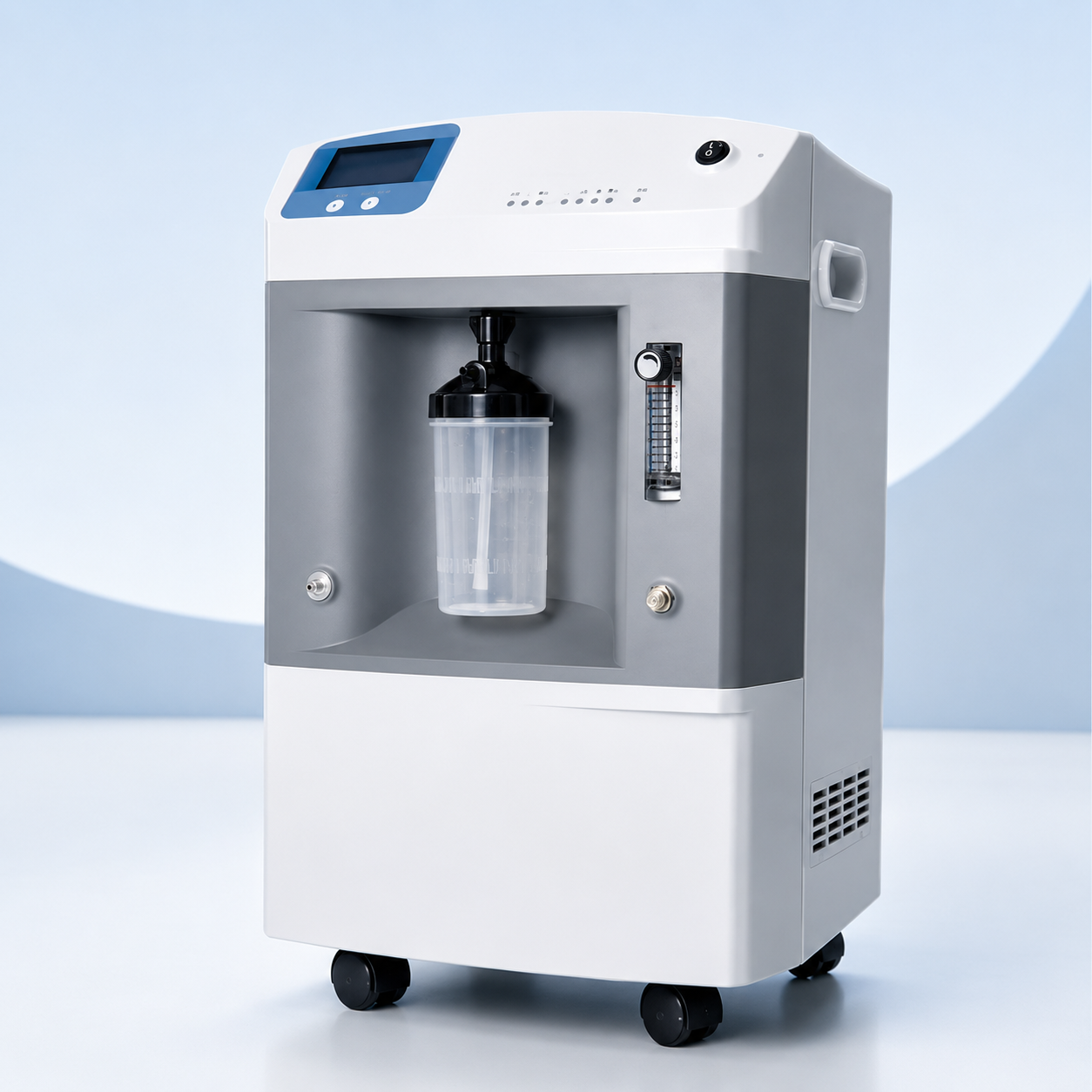
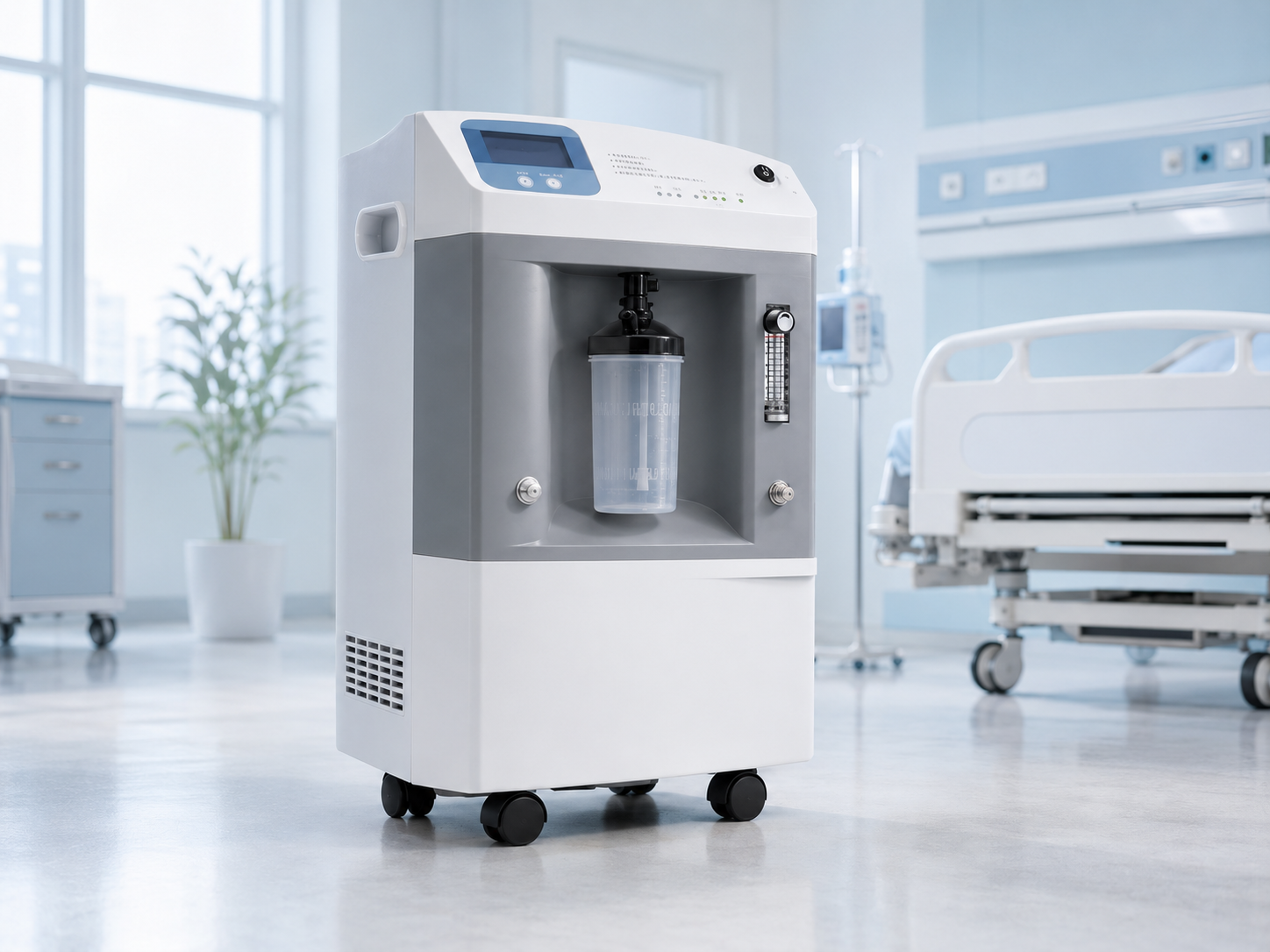
Oxygen Concentrator
KSh75,000.00
How Does an Oxygen Concentrator Work?
Room air contains approximately 21% oxygen,
along with nitrogen and other gases.
An oxygen concentrator processes this air through several stages:
- It draws room air into the machine.
- Filters help remove dust and other particles.
- Molecular sieve beds separate nitrogen from the air.
- Oxygen-enriched air collects inside the unit.
- The prescribed oxygen flow reaches the patient through tubing and a nasal cannula or mask.
The machine repeats this process continuously,
eliminating the need to store large quantities of compressed oxygen.
Categories Homecare Equipment, Maternity Equipment, Medical Equipment
Brand: Longfian
Oxygen Concentrator in Kenya:
Reliable Oxygen Support for Home and Healthcare Use
Breathing should never feel like hard work.
For people living with respiratory conditions,
recovering after treatment, or receiving long-term care at home,
dependable oxygen support can bring greater comfort and confidence.
An oxygen concentrator provides a convenient source of supplemental oxygen
without requiring frequent cylinder refills. At Medjet Hospital Supplies,
we help families, caregivers, clinics, and hospitals in Kenya
choose oxygen concentrators that match their medical requirements,
environment, and budget.
Important: Supplemental oxygen should be used according
to a qualified healthcare professional’s prescription.
The required flow rate and duration vary from one patient to another.
What Is an Oxygen Concentrator?
An oxygen concentrator is a medical device that draws in surrounding air,
removes most of the nitrogen, and delivers oxygen-enriched air to the
user through a nasal cannula or oxygen mask.
Unlike an oxygen cylinder, which contains a
limited amount of compressed oxygen, a concentrator continuously
produces oxygen while connected to a reliable power source.
This makes it particularly useful for patients who need regular
or extended oxygen therapy.
Who May Need an Oxygen Concentrator?
A healthcare professional may recommend supplemental oxygen
for people whose blood oxygen levels are consistently below the desired range.
Depending on the diagnosis and treatment plan,
an oxygen concentrator may support patients with:
- Chronic obstructive pulmonary disease (COPD)
- Certain severe respiratory infections
- Pulmonary fibrosis
- Chronic lung disease
- Some cardiac conditions
- Post-operative oxygen requirements
- Palliative or long-term home-care needs
- Other conditions that affect oxygen saturation
Breathlessness alone does not always mean a person needs oxygen.
A medical assessment, including oxygen saturation measurement
and sometimes additional tests, is necessary before beginning therapy.
Benefits of Using an Oxygen Concentrator
Continuous Oxygen Supply
As long as the unit has power and operates correctly,
it can provide oxygen without running empty like a conventional cylinder.
Fewer Cylinder Refills
A concentrator reduces the inconvenience of transporting and
replacing heavy oxygen cylinders. However,
keeping a backup cylinder may still be advisable where power interruptions occur.
Suitable for Home Care
Many stationary models are designed for straightforward daily use.
Clear controls, wheels, alarms, and flow indicators make them
manageable for trained patients and caregivers.
Cost-Effective for Long-Term Use
Although the initial purchase price may be higher than that of a cylinder,
an oxygen concentrator can reduce recurring refill and
transport expenses for people requiring long-term therapy.
Easier Movement
Stationary units often have caster wheels for movement between rooms.
Portable oxygen concentrators offer greater mobility for eligible patients,
although their output and delivery method may differ from those of larger home units.
Stationary vs Portable Oxygen Concentrators
Stationary Oxygen Concentrators
These are commonly used in homes, clinics, nursing facilities, and hospital wards.
They are generally larger and powered directly from a wall socket.
They may be suitable for users who:
- Spend most of their time at home
- Require oxygen for extended periods
- Need continuous-flow delivery
- Want a dependable primary oxygen source
Portable Oxygen Concentrators
Portable models are smaller and may use rechargeable batteries,
AC power, or vehicle DC power.
They are designed to support greater mobility,
but not every portable unit is suitable for every prescription.
Some models provide pulse-dose oxygen rather than continuous flow.
Pulse-dose delivery releases oxygen when the device detects inhalation.
Before buying one, confirm that its delivery mode and
capacity meet the patient’s prescribed needs.
How to Choose the Right Oxygen Concentrator
The best machine is not automatically the one with the highest flow rate.
It is the unit that safely matches the patient’s prescription and practical circumstances.
1. Prescribed Flow Rate
Oxygen output is commonly measured in litres per minute (LPM).
Popular options include 5-litre and 10-litre oxygen concentrators.
Do not increase or reduce the flow without guidance from a healthcare professional.
2. Continuous Flow or Pulse Dose
Continuous-flow devices supply oxygen at a steady rate.
Pulse-dose units release oxygen during inhalation.
The appropriate option depends on the
patient’s clinical requirements and breathing pattern.
3. Oxygen Concentration
Choose a medical-grade device designed to maintain the
specified oxygen concentration within its recommended operating range.
Ask the supplier for clear performance information rather
than relying only on marketing labels.
4. Power Consumption
A patient who uses oxygen for many hours each day should consider
the unit’s energy requirements.
Efficient equipment may help control long-term electricity costs.
5. Noise Level
Because concentrators contain a compressor, they produce some sound.
A quieter model can improve comfort,
especially when the device will operate in a bedroom at night.
6. Alarm System
Useful safety alerts may include:
- Power failure alarm
- Low oxygen concentration warning
- High- or low-pressure alert
- Blocked tubing warning
- Overheating alarm
Alarm features differ between models, so confirm them before purchasing.
7. Availability of Maintenance and Spare Parts
A concentrator needs filters, servicing, and eventually replacement parts.
Buying from a dependable medical equipment supplier in Kenya
makes technical support easier to access.
8. Backup Oxygen Plan
An oxygen concentrator depends on electricity.
Homes and facilities in areas with frequent outages should have
a suitable backup solution, such as an oxygen cylinder or
approved power system.
5-Litre vs 10-Litre Oxygen Concentrator
A 5-litre oxygen concentrator is commonly selected for home oxygen therapy
when the prescribed flow falls within the machine’s supported range.
It is often more compact and may consume less electricity than a higher-capacity unit.
A 10-litre oxygen concentrator delivers a higher maximum flow
and may be considered for patients or healthcare environments
with greater oxygen requirements. However,
a higher-capacity machine should not replace professional clinical assessment.
Always match the unit to the prescribed flow rate
while allowing for its documented performance at that setting.
Using an Oxygen Concentrator Safely at Home
Oxygen itself does not burn, but it makes fires burn faster and more intensely.
Careful use is therefore essential.
- Keep the concentrator away from cigarettes, candles, gas cookers, and open flames.
- Do not use petroleum jelly or oil-based products near oxygen equipment.
- Place the unit in a well-ventilated area.
- Avoid pushing it directly against a wall, curtain, or furniture.
- Keep tubing free from bends, blockages, and trip hazards.
- Connect the device according to the manufacturer’s electrical instructions.
- Never alter the prescribed flow rate without medical guidance.
- Learn what each alarm means before regular use.
- Keep emergency contacts and a backup oxygen plan available.
If a patient develops severe difficulty breathing, bluish lips, confusion, chest pain,
or a sudden decline in condition, seek emergency medical assistance.
Do not rely on the concentrator as a substitute for urgent care.
Cleaning and Maintenance
Routine care helps an oxygen concentrator operate efficiently and hygienically.
Wipe the exterior using a soft, slightly damp cloth.
Clean or replace external filters according to the manufacturer’s schedule.
Cannulas, masks, tubing, and humidifier bottles should be
cared for according to clinical and manufacturer instructions.
Do not open the machine or attempt internal repairs unless you are a qualified technician.
Compressor problems, unusual noise, persistent alarms, reduced output,
or low oxygen concentration require professional assessment.
Oxygen Concentrator Price in Kenya
The price of an oxygen concentrator in Kenya depends on several factors, including:
- Maximum flow capacity
- Stationary or portable design
- Continuous-flow or pulse-dose delivery
- Battery capacity
- Brand and build quality
- Alarm and monitoring features
- Warranty coverage
- Availability of spare parts and technical support
Price matters, but it should not be the only consideration.
A very cheap machine may become expensive
if it cannot maintain the required output or if servicing
and replacement parts are unavailable.
For an accurate quotation, share the required flow rate,
intended place of use, approximate daily operating hours,
and whether portability is necessary.
Why Buy an Oxygen Concentrator from Medjet Hospital Supplies?
At Medjet Hospital Supplies, we understand that buying
respiratory equipment is often more than an ordinary purchase.
It may involve a loved one returning home,
a patient who needs greater independence,
or a healthcare facility preparing to deliver timely support.
We aim to make the process easier through:
- Practical guidance when selecting a suitable model
- Oxygen concentrators for home, clinic, and hospital use
- Clear product information
- Delivery options across Kenya
- Technical support and maintenance guidance
- Access to compatible accessories and related respiratory equipment
Our goal is not simply to sell a machine.
It is to help you choose an oxygen solution that is dependable,
appropriate, and easier to manage.
Frequently Asked Questions
Can I use an oxygen concentrator without a prescription?
You should use supplemental oxygen only after
assessment by a qualified healthcare professional.
Too little oxygen may be ineffective,
while inappropriate oxygen administration
can be harmful in some medical conditions.
Does an oxygen concentrator run out of oxygen?
It does not store a fixed supply like a cylinder.
Instead, it continuously processes surrounding air.
It will work while it has power, adequate ventilation,
and no mechanical fault.
Can an oxygen concentrator operate throughout the night?
Many medical concentrators are designed for extended operation.
The specific model must match the patient’s prescription,
and a backup plan is important in case of a power outage or equipment failure.
Does an oxygen concentrator need refilling?
No oxygen refill is required. However,
filters and accessories need routine care,
and the device requires periodic professional servicing.
Can two patients share one oxygen concentrator?
Do not split the oxygen supply unless the equipment is specifically
designed and clinically approved for that purpose.
Dividing the flow may prevent either patient from
receiving the prescribed oxygen level.
Can I travel with a portable oxygen concentrator?
Some portable models may be accepted for travel,
but airline requirements vary. Confirm the exact device,
battery requirements, medical documentation,
and airline approval before travelling.
What size oxygen concentrator is best for home use?
That depends on the prescribed flow rate,
required delivery method, hours of use, electricity reliability, and patient mobility.
A clinician and a knowledgeable supplier can help determine
whether a 5-litre, 10-litre, or portable model is appropriate.
Order an Oxygen Concentrator in Kenya
Looking for a reliable oxygen concentrator for home care, a clinic, or a hospital?
Contact Medjet Hospital Supplies
for product guidance, pricing, availability, and delivery information.
Tell us the prescribed flow rate and how the machine will be used,
and our team will help you identify a suitable option.
Call or message us today to request a quotation.
Order this Oxygen Concentrator from MJ Hospital Supplies today and get free delivery.
You can also follow us on our: Facebook Page: Mj Hospital Supplies for more updates.
Instagram Page:https://www.instagram.com/medjet_hospital/
Pinterest page: https://www.pinterest.com/mjhospitalsupplies/
Linked in page: https://www.linkedin.com/company/medjet-hospital-supplies-ltd/
Twitter Page: https://twitter.com/medjethospital