

Medical Equipment Maintenance Planning: Questions to Ask Before You Buy

A practical guide to buying equipment that stays safe, serviceable and ready for patients – long after installation day.
| THE 60-SECOND REALITY CHECK If a device fails tomorrow, do you know who will fix it, how fast they can respond, where the spare parts will come from and what the downtime will cost? If any answer is unclear, maintenance planning should begin before the purchase order is signed. |
Buying medical equipment is rarely just a transaction. It is a commitment to years of inspections, preventive maintenance, calibration, consumables, software support, staff training and responsible retirement. The purchase price may be visible, but the cost of keeping a device clinically dependable often sits below the surface.
This guide gives clinics, hospitals, laboratories and healthcare entrepreneurs a clearer way to evaluate that hidden responsibility. Use it during vendor conversations, procurement meetings and pre-installation planning.
Before we begin: how maintenance-ready are you?
Tick every statement that is already true for your facility:
We maintain a complete asset register with model and serial numbers.
Every critical device has a named maintenance owner.
We know the recommended preventive-maintenance interval for each device.
We can access qualified technical support and genuine or approved parts.
Staff know how to report faults and remove unsafe equipment from service.
We budget for service, calibration, accessories and downtime – not only purchase price.
| YOUR RESULT 5-6 ticks: strong foundation. 3-4: close the gaps before commissioning. 0-2: pause and build a basic maintenance plan before adding more equipment. |
Why maintenance planning belongs in the buying decision
A technically impressive device can become a poor investment when local support is unavailable, consumables are hard to source or repair turnaround is unpredictable. Good maintenance planning protects more than the machine: it supports patient safety, workflow continuity, accurate results, staff confidence and the useful life of the asset.
The best question is not simply, “Can we afford to buy it?” It is: “Can we operate, maintain and support it safely throughout its intended life?”
1. What does the full maintenance schedule require?
Ask the supplier to separate daily care, user checks, preventive maintenance, calibration, electrical-safety testing and corrective repair. These are not interchangeable. A clear schedule should state who performs each task, how often it is done, which tools or parts are needed and what records must be kept.
Which checks must users complete before every shift or patient?
Which tasks require a trained biomedical technician or authorised service agent?
Does the device require calibration, performance verification or software validation?
Will maintenance intervals change with usage intensity, environment or mobility?
| ASK FOR EVIDENCE Request the current operator manual, service requirements and recommended maintenance schedule before purchase – not after delivery. |
2. Who can service the equipment locally?
A warranty is valuable only when there is a workable route to support. Confirm whether technicians are based locally, travel from another region or depend on remote guidance. Ask what happens after the warranty expires and whether independent qualified technicians can obtain service information, test procedures and approved parts.
Where is the nearest qualified technician?
What are the normal acknowledgement and on-site response times?
Is telephone or remote troubleshooting available?
What proof of training or authorisation can the service provider provide?
Is loan equipment available for critical devices during prolonged repairs?
3. Are spare parts, accessories and consumables reliably available?
A low purchase price can lose its appeal when a proprietary sensor, battery, filter, probe, cuff, cable or board is unavailable. Identify frequently replaced items, their expected lifespan, current price, lead time and compatibility rules. For imported equipment, ask whether essential parts are stocked in Kenya or ordered only after a fault occurs.
Also clarify whether using third-party accessories affects safety, measurement performance or warranty coverage. Compatibility should be confirmed in writing by the supplier or manufacturer.
4. What exactly does the warranty cover?
Do not accept “one-year warranty” as a complete answer. Read the exclusions. Some warranties cover parts but not labour; others exclude travel, batteries, probes, accidental damage, preventive maintenance or damage caused by unstable power.
| Clarify | Question to ask |
| Start date | Does cover begin at shipment, delivery, installation or commissioning? |
| Scope | Are parts, labour, travel, transport and remote support included? |
| Exclusions | Which accessories, consumables and types of damage are excluded? |
| Turnaround | What repair timeline applies, and what happens if it is missed? |
| Conditions | Must maintenance be performed only by a named service provider? |
| After warranty | What service plans and estimated costs are available? |
5. What is the true cost of ownership?
The purchase price is only one line in the equipment budget. Build a three- to five-year estimate that includes installation, training, preventive maintenance, calibration, consumables, software licences, batteries, replacement accessories, parts, transport, power protection and disposal.
| SIMPLE PLANNING FORMULA Total cost of ownership = purchase + installation + training + planned maintenance + calibration + consumables + likely repairs + software + downtime + end-of-life costs. |
Downtime deserves its own estimate. Ask: if this device is unavailable for one day, what procedures are delayed, outsourced or cancelled? Which patients are affected? What backup capacity exists?
6. Is the equipment suitable for your operating environment?
Maintenance problems are sometimes purchasing problems in disguise. Confirm the device’s electrical supply, earthing, surge protection, ventilation, temperature, humidity, water quality, network and space requirements. Mobile equipment also needs safe transport, wheel and brake checks, charging routines and protection from impact.
Can your power supply meet the manufacturer’s requirements consistently?
Is a voltage stabiliser, UPS or dedicated circuit required?
Can the room maintain the recommended temperature, cleanliness and ventilation?
Will dust, moisture, heat or frequent transport increase maintenance needs?
Are the required gases, water, drainage or network connections available?
7. What training is included – and who needs it?
User error can look like equipment failure. Effective training should cover correct operation, cleaning, routine inspection, alarm response, safe shutdown, basic troubleshooting and fault reporting. Ask whether training is included for all shifts, whether new staff can be trained later and whether competency is documented.
Technical staff may need separate training for preventive maintenance, calibration checks and service diagnostics. Request certificates, quick-reference guides and a handover record.
8. How will maintenance records be managed?
Every device should have a traceable history. At minimum, record its asset number, manufacturer, model, serial number, location, risk level, commissioning date, warranty, maintenance schedule, service reports, calibration status, faults, parts replaced and final disposal.
A simple spreadsheet can work for a small clinic; a larger facility may need a computerised maintenance-management system. The tool matters less than disciplined, complete and retrievable records.
9. What happens when the equipment fails?
Agree on the fault pathway before the first fault. Staff should know how to stop use safely, label or isolate the device, protect patient data, report the problem and escalate urgent cases. The supplier should explain remote triage, collection, transport, repair approval and return-to-service testing.
Make the patient and user safe; stop using equipment that may be unreliable.
Label and quarantine the device to prevent accidental reuse.
Record the fault, alarms, conditions and accessories involved.
Notify the responsible clinical lead and maintenance contact.
After repair, document safety and performance checks before clinical use resumes.
10. What is the end-of-life plan?
Ask how long the manufacturer expects to support the model, when parts availability may end and how software or cybersecurity updates are handled. Establish retirement criteria such as repeated failure, unacceptable risk, unavailable parts, inaccurate performance, high repair cost or loss of manufacturer support.
Disposal must account for patient data, batteries, electronic waste, contaminated components and local requirements. A device should leave service through a controlled process, not disappear from the asset register.
The 15-question pre-purchase maintenance checklist
Have we received the operator manual and maintenance schedule?Who performs daily checks, preventive maintenance, calibration and repairs?
Is qualified technical support available locally?
What response and repair turnaround times are realistic?
Which consumables and high-failure parts should we stock?
Are prices and lead times for common parts documented?
What does the warranty include and exclude?
What service options exist after the warranty?
Power, room, network and environmental conditions are required?
Is initial and refresher training included?
How will competency and handover be documented?
What maintenance and calibration records must we keep?
What backup plan will protect services during downtime?
How long will the model receive parts and software support?
What is the three- to five-year total cost of ownership?
A quick vendor comparison scorecard
Score each supplier from 0 to 2: 0 = unclear/unavailable, 1 = partial, 2 = clear and documented. A low purchase price should not cancel out weak support.
| Area | What good looks like | Score |
| Maintenance schedule | Clear intervals, roles and documentation | __/2 |
| Local technical support | Qualified team and credible response times | __/2 |
| Parts and consumables | Availability, prices and lead times confirmed | __/2 |
| Warranty | Scope, exclusions and process documented | __/2 |
| Training | User and technical training included | __/2 |
| Site suitability | Infrastructure requirements verified | __/2 |
| Downtime plan | Backup or loan pathway identified | __/2 |
| Lifecycle support | Parts/software support horizon stated | __/2 |
| Total cost | Multi-year cost estimate is transparent | __/2 |
| Records | Service and calibration documents supplied | __/2 |
| INTERPRET THE TOTAL 17-20: maintenance-ready offer. 12-16: proceed only after closing documented gaps. 0-11: high ownership risk – compare alternatives or renegotiate support. |
Red flags that deserve a pause
The seller cannot provide a model-specific manual or maintenance schedule.
Warranty promises are verbal, vague or missing exclusions and timelines.
No one can name the local technician or explain the escalation path.
Common accessories or parts are “available on request” with no lead time.
Installation requirements are discussed only after payment.
The quote omits training, calibration, software fees or essential accessories.
The model is near discontinuation or its support horizon is unknown.
A better way to buy: plan the first year before delivery
Before commissioning, assign the asset owner, confirm the room and utilities, schedule user training, identify service contacts, enter the device in the asset register and book the first planned-maintenance date. Stock critical consumables and create a simple fault-reporting route. This turns maintenance from an emergency response into a predictable operating process.
Final thought: buy uptime, not just equipment
The best medical equipment purchase is not necessarily the cheapest or the most feature-rich. It is the option your team can operate correctly, support locally, maintain consistently and trust when a patient depends on it.
Ask maintenance questions early. Require clear answers. Put responsibilities, timelines and costs in writing. That discipline can reduce surprises, strengthen safety and help every shilling invested in medical equipment work harder.
| READY TO PLAN YOUR PURCHASE? Talk to Medjet Hospital Supplies about equipment selection, installation requirements, training, accessories and after-sales support. Share your clinical need, expected workload and facility setup so the conversation starts with the right questions. |
Order from MJ Hospital Supplies today and get free delivery.
You can also follow us on our: Facebook Page: Mj Hospital Supplies for more updates.
Instagram Page:https://www.instagram.com/medjet_hospital/
Pinterest page: https://www.pinterest.com/mjhospitalsupplies/
Linked in page: https://www.linkedin.com/company/medjet-hospital-supplies-ltd/
Twitter Page: https://twitter.com/medjethospital
Related Articles


2026 Maternity Equipment Checklist for Clinics and Hospitals in Kenya
August 3, 2026
No Comments
Read More »

First 10 Minutes of a Medical Emergency: Is Your Facility Ready?
July 27, 2026
No Comments
Read More »

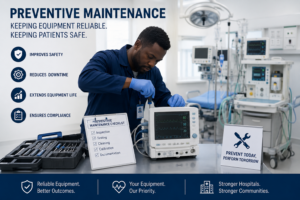
Why Preventive Maintenance Is One of the Best Investments a Hospital Can Make
July 13, 2026
No Comments
Read More »