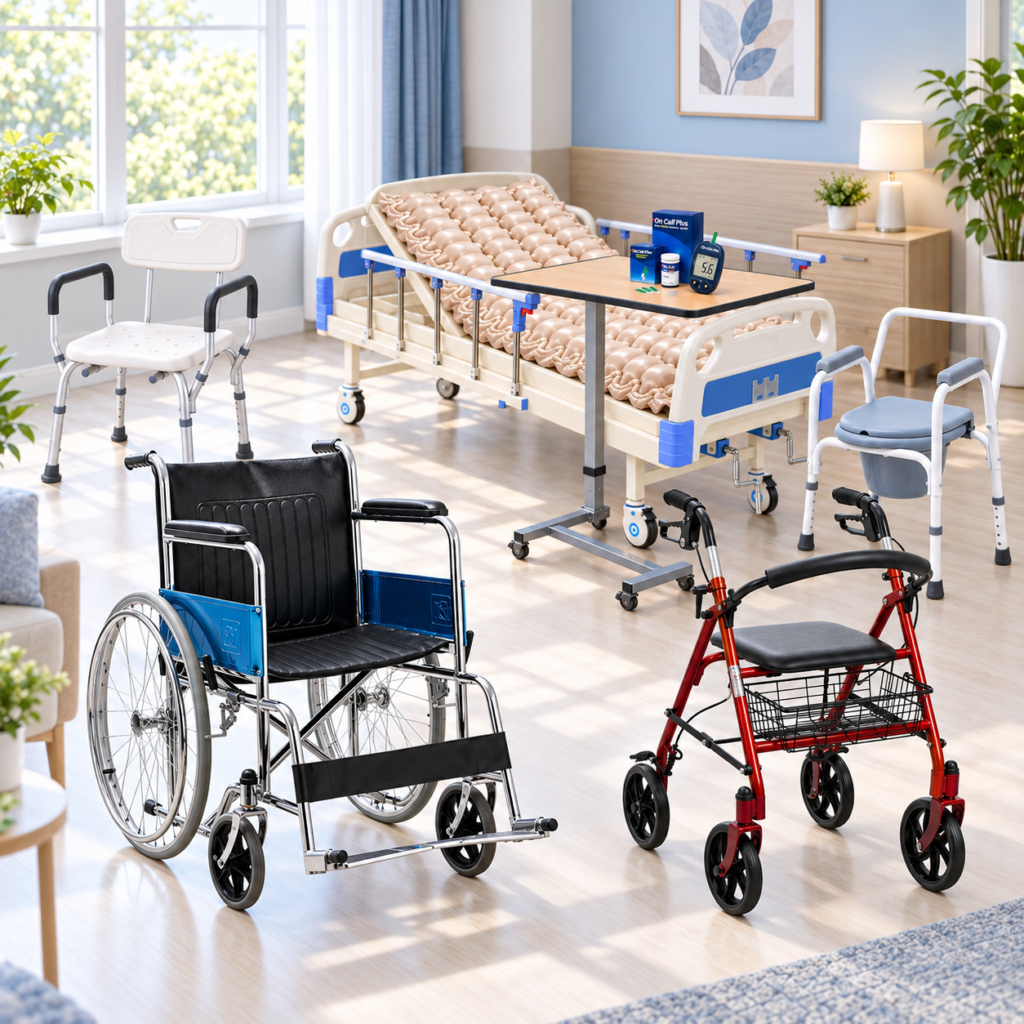
Caring for an older adult, a person recovering after surgery, or someone living with limited mobility involves more than providing assistance. The home environment and the equipment used can directly influence comfort, confidence, independence and caregiver safety.
The right homecare equipment can make bathing, toileting, walking, transferring and resting easier. However, equipment should always be selected according to the user’s condition, strength, mobility level, body size and home layout—not simply because it appears convenient.
Use this practical checklist to identify essential homecare equipment and create a safer, more supportive daily routine.
1. Mobility and Walking Equipment
Mobility aids help people move with greater stability while reducing unnecessary dependence on caregivers. The World Health Organization identifies products such as wheelchairs and walking aids as important tools for maintaining function, independence and participation in everyday life.
Depending on the user’s mobility level, consider:
- Walking stick for light balance support
- Crutches for temporary or one-sided mobility assistance
- Walking frame or Zimmer frame for greater stability
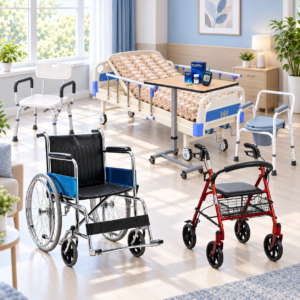
- Rollator walker with wheels, hand brakes and a resting seat
- Standard wheelchair for assisted mobility
- Reclining wheelchair for users who require additional postural support
- Electric wheelchair for greater independent movement
- Transfer wheelchair for short trips and assisted transportation
- Mobility ramp where steps restrict safe access
Before purchasing, confirm the user’s weight, height, balance, upper-body strength and ability to operate brakes. Walking aids should be adjusted to the correct height, while wheelchairs should provide suitable seat width, foot support and posture.
Check rubber tips, wheels, brakes, handles and folding mechanisms regularly. A worn walking-aid tip or loose wheelchair brake can turn helpful equipment into a safety risk.
2. Bathroom and Toilet Safety Equipment
Bathrooms are particularly challenging because wet surfaces, restricted spaces and frequent sitting or standing movements can increase the risk of slipping.
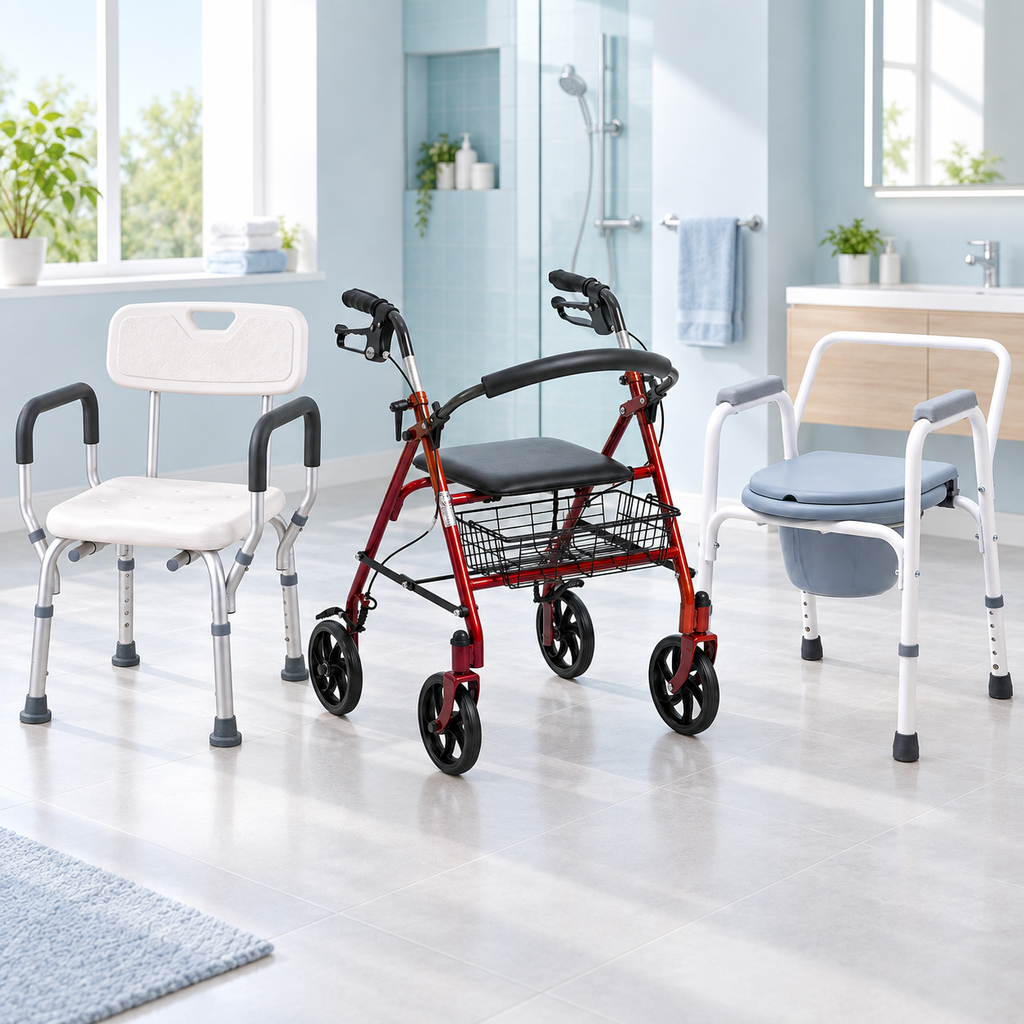
Useful bathroom and toilet aids include:
- Height-adjustable shower chair
- Bath chair or bath bench
- Wall-mounted grab rails
- Raised toilet seat
- Toilet raiser with handles
- Bedside commode
- Toilet safety frame
- Non-slip bathroom mat
- Handheld shower head
Choose a shower chair with stable, non-slip feet and a seat that is easy to clean. A height-adjustable model can help position the user’s feet firmly on the floor while reducing strain when standing.
Grab rails must be properly installed into a secure surface. Towel rails and soap holders should never be used as support bars because they may not be designed to bear body weight.
For users who struggle to reach the bathroom at night, a bedside commode can reduce walking distance and urgency-related falls. Position it on a level surface with enough space for a caregiver to assist.
3. Bedroom and Resting Equipment
A well-arranged bedroom can make repositioning, getting in and out of bed, personal care and overnight monitoring much safer.
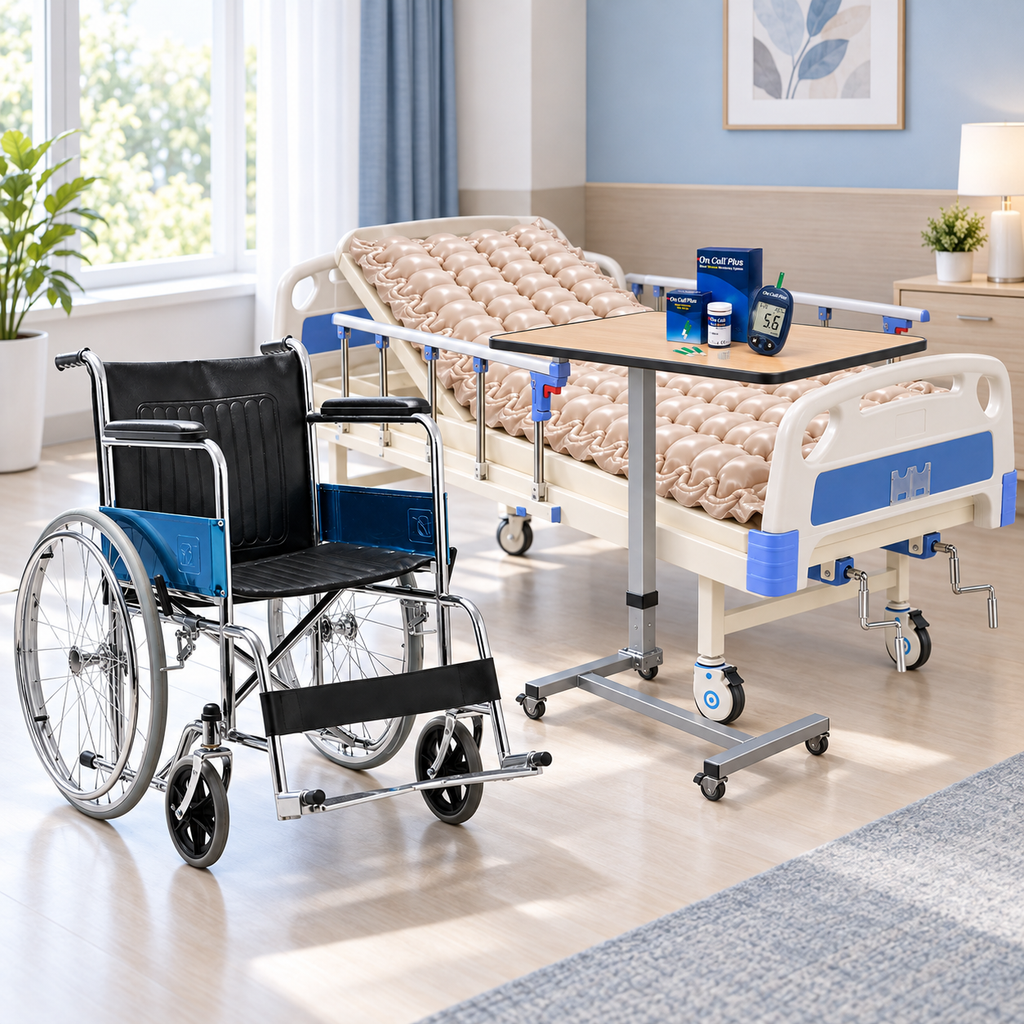
Consider the following:
- Adjustable hospital or homecare bed
- Pressure-relieving mattress
- Waterproof mattress protector
- Bedside rails, when professionally recommended
- Overbed table
- Bedside commode
- Bed backrest
- Bed transfer handle
- Positioning pillows
- Patient lifting device for users who cannot transfer safely
- Night light or motion-activated lighting
An adjustable bed can help with positioning, feeding, breathing comfort and caregiver access. The bed height should allow safe transfers while enabling the caregiver to provide assistance without excessive bending.
Pressure-care products may be necessary for users who spend extended periods in bed or have difficulty repositioning themselves. Equipment alone is not enough; follow a clinician’s repositioning and skin-care plan.
Bed rails should not be treated as a universal fall-prevention solution. Incorrectly selected or fitted rails can create entrapment and climbing risks, so professional assessment is important.
4. Transfer and Caregiver Support Equipment
Transfers—such as moving from a bed to a wheelchair—are common moments for injury. Pulling someone by the arms or lifting without suitable support can harm both the user and caregiver.
Depending on the person’s abilities, useful equipment may include:
- Transfer board
- Transfer belt
- Rotating transfer aid
- Patient hoist
- Mobile lifting device
- Standing aid
- Slide sheet
- Electric transfer chair
The appropriate device depends on whether the user can sit upright, bear weight, follow instructions or assist with the movement.
Caregivers should receive training before using hoists, slings or transfer aids. Confirm that every component is compatible, correctly fitted and rated for the user’s weight. Never improvise with ordinary belts, sheets or furniture.
5. Pressure Care and Skin Protection
Limited movement can place continuous pressure on certain areas of the body. This may increase the risk of skin damage, particularly around the heels, hips, elbows and lower back.
A pressure-care checklist may include:
- Pressure-relieving mattress
- Alternating-pressure air mattress, if clinically recommended
- Wheelchair pressure cushion
- Heel protectors
- Positioning wedges and pillows
- Breathable bedding
- Skin-cleansing and moisture-management supplies
Inspect the user’s skin regularly and report persistent redness, broken skin, swelling or unusual warmth to a healthcare professional. A pressure mattress or cushion should support—not replace—regular repositioning, hygiene, hydration, nutrition and clinical monitoring.
6. Daily Living and Personal-Care Aids
Small aids can make everyday activities easier while helping the user retain independence.
Helpful options include:
- Reaching aid or grabber
- Long-handled sponge
- Dressing stick
- Sock aid
- Easy-grip cutlery
- Non-slip food tray
- Spill-resistant cup
- Pill organiser
- Urinal bottle or bedpan
- Disposable gloves
- Adult hygiene and continence products
Select equipment according to what the individual can still do independently. The aim should be to support ability—not unnecessarily take over every task.
Keep personal-care items organised and within comfortable reach. Frequently used objects should not require stretching, climbing or bending.
7. Basic Home Health-Monitoring Equipment
Some households may benefit from basic monitoring devices, especially when a healthcare professional has recommended regular checks.
Common examples include:
- Digital thermometer
- Blood-pressure monitor
- Pulse oximeter
- Glucometer for prescribed blood-glucose monitoring
- Weighing scale
- Medication organiser
- Written health-monitoring record
Choose devices that are easy to read and operate. Learn the correct measurement technique and keep a dated record when requested by the treating clinician.
Home readings should never be used as the sole basis for changing prescribed medication or delaying medical attention. Ask a qualified healthcare professional which measurements are necessary, how often to take them and which results require urgent action.
8. Emergency and Communication Equipment
A safe homecare setup should also prepare for unexpected situations.
Keep the following accessible:
- Charged mobile phone
- Emergency contact list
- Personal alarm or caregiver call bell
- Torch or rechargeable emergency light
- Clearly labelled medication list
- First-aid kit
- Fire extinguisher or fire blanket
- Backup power plan for essential electrical equipment
Emergency contact information should include the primary caregiver, nearby family member, treating clinician, ambulance service and preferred healthcare facility.
If the user spends time alone, consider an alarm that can be worn or reached after a fall. The NHS notes that personal alarms and monitoring systems can help alert caregivers when assistance is needed.
9. Home Environment Safety Check
Good equipment cannot compensate for an unsafe environment. Walk through the home from the user’s perspective and look for obstacles.
Check that:
- Corridors and doorways are free from clutter
- Loose rugs and trailing cables have been removed or secured
- Frequently used rooms have adequate lighting
- Stairways have secure handrails
- Floors remain dry and non-slip
- Furniture does not block walking or wheelchair routes
- Wheelchairs can pass through essential doorways
- Ramps have suitable gradients and secure edges
- The bed, toilet and chairs are not excessively low
- Daily essentials are stored within comfortable reach
Home fall-prevention guidance recommends removing clutter and tripping hazards and improving household safety.
How to Choose the Right Homecare Equipment
Before buying, ask these important questions:
- What activities does the user find difficult or unsafe?
- Can the user stand, walk or bear weight?
- Will the equipment fit through the home’s doors and corridors?
- Is the user within the stated safe weight capacity?
- Can the equipment be adjusted to the correct height?
- Are replacement parts and servicing available?
- Is it easy to clean and disinfect?
- Does the caregiver understand how to use it?
- Has a clinician recommended professional fitting or assessment?
- Will the equipment still be suitable if the user’s needs change?
For complex mobility, seating, transfer or pressure-care needs, request an assessment from a doctor, physiotherapist, occupational therapist or other qualified professional. Home assessments can help identify difficulties that may be overlooked during ordinary shopping.
Final Homecare Equipment Checklist
Before considering your setup complete, confirm that you have addressed:
- Safe mobility
- Bathroom and toilet access
- Comfortable sleeping and positioning
- Safe transfers
- Pressure and skin protection
- Personal hygiene
- Medication organisation
- Recommended health monitoring
- Emergency communication
- Clear and well-lit movement routes
- Caregiver training
- Regular equipment inspection
Safer Support Begins with the Right Equipment
The best homecare setup is not necessarily the one with the most equipment. It is the one carefully matched to the user, caregiver and home.
At Medjet Hospital Supplies, we provide reliable homecare, mobility, bathroom-safety and patient-support equipment for families, caregivers and healthcare facilities across Kenya. Our team can help you compare suitable options, confirm important measurements and select equipment that supports safer, more dignified daily care.
Contact Medjet Hospital Supplies today for assistance choosing the right homecare equipment for your needs.
Medical note: This checklist provides general information and does not replace assessment or advice from a qualified healthcare professional.
Order from MJ Hospital Supplies today and get free delivery.
You can also follow us on our: Facebook Page: Mj Hospital Supplies for more updates.
Instagram Page:https://www.instagram.com/medjet_hospital/
Pinterest page: https://www.pinterest.com/mjhospitalsupplies/
Linked in page: https://www.linkedin.com/company/medjet-hospital-supplies-ltd/
Twitter Page: https://twitter.com/medjethospital