
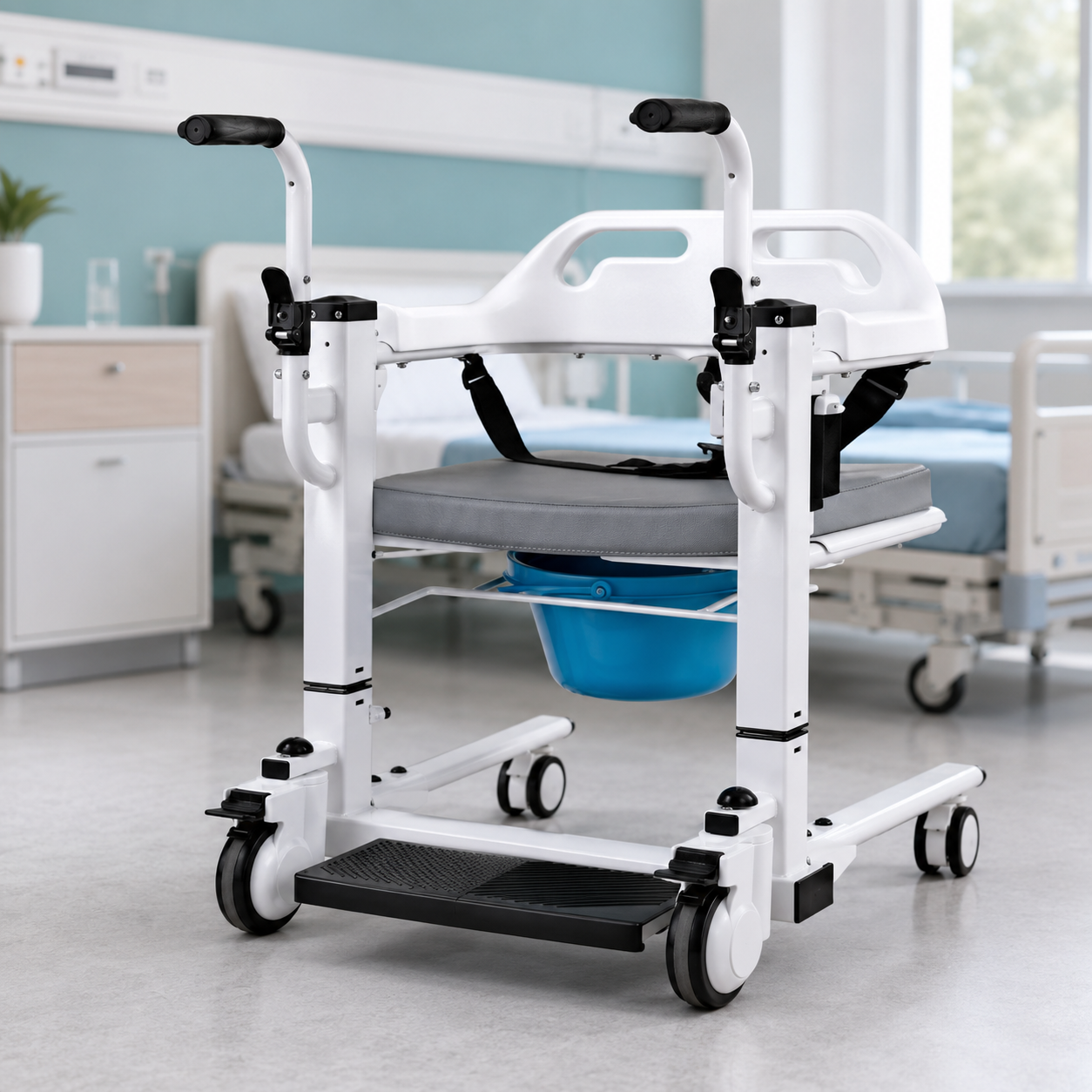
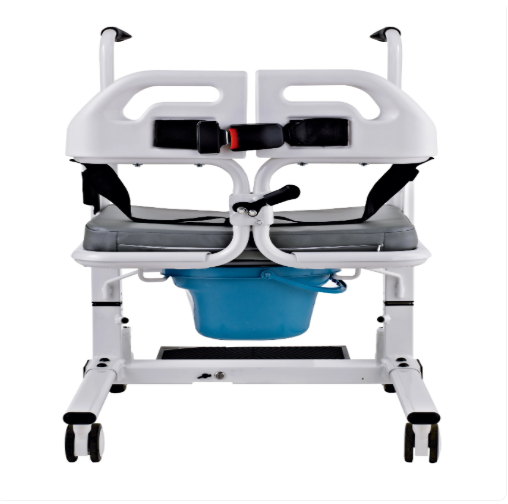
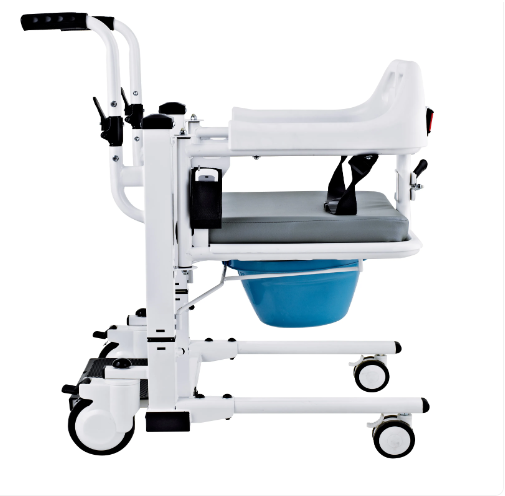
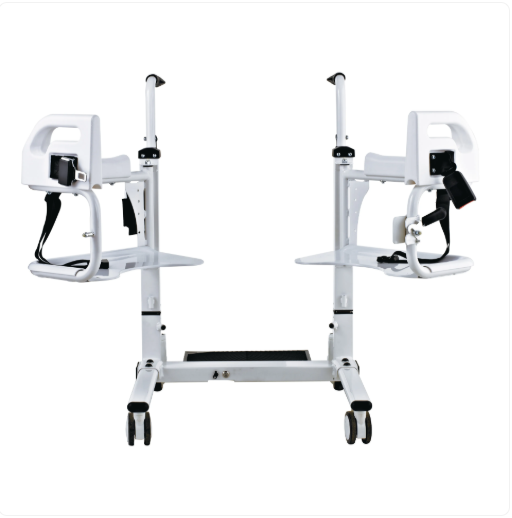
Electric Transfer Chair
KSh80,000.00
Products Parameters:
| Wheelchair width | Folding width | Seat Width | Rear wheel diameter | Front wheel diameter | Seat height |
| 58.5cm | — | 46cm/51cm | 3″ | 5″ | 39.5-59.5cm |
| Wheelchair height | Wheelchair length | Seat depth | Back height | Weight capacity | Weight |
| 87.5~107.5cm | 69cm | 40cm | 37cm | 100kg | 26.5kg |
Categories Homecare Equipment, Wheelchairs
Electric Transfer Chair in Kenya – Safe,
Comfortable Patient Mobility
Make patient transfers safer, smoother and less physically demanding
with an Electric Transfer Chair designed for hospitals, clinics,
rehabilitation centres, nursing homes and home-care settings.
This powered mobility aid assists caregivers when transferring people
with limited mobility between a bed, wheelchair, sofa, toilet
or other suitable surfaces.
Unlike ordinary transport chairs, an electric patient transfer chair
uses a powered lifting mechanism to raise and lower the seat.
This reduces manual lifting, improves patient comfort and
helps caregivers follow safer handling practices.
What Is an Electric Transfer Chair?
An electric transfer chair is a specialised patient-handling device that combines mobility,
powered lifting and seated support. Its adjustable seat can be positioned closer
to the height of a bed or other compatible surface,
allowing the patient to be transferred with less physical effort.
Depending on the model, the chair may include a split seat, rechargeable battery,
control handset, safety belt, lockable wheels, adjustable base and water-resistant components.
Always confirm the exact configuration before purchasing.
Key Features of Electric Transfer Chair
- Electric lifting system: Raises or lowers the patient using powered controls.
- Rechargeable operation: Supports cordless use within the recommended operating time.
- Secure seating: A safety belt or locking seat structure helps maintain a stable seated position.
- Lockable castor wheels: Improve stability when positioning or transferring the patient.
- Smooth manoeuvrability: Makes it easier to move through wards, rooms and corridors.
- Supportive backrest: Helps the patient remain comfortable during short-distance transfers.
- Adjustable height: Allows alignment with compatible beds, chairs and other surfaces.
- Durable frame: Built for regular use when operated within the stated weight capacity.
- Caregiver-friendly controls: Enable controlled lifting and lowering without strenuous manual handling.
- Foot support: Provides a more comfortable position while the chair is moving.
Benefits of an Electric Patient Transfer Chair
Reduces Manual Lifting
Repeatedly lifting patients can place considerable strain on caregivers.
The powered lifting mechanism handles much of the vertical movement,
reducing the physical effort required during suitable transfers.
Improves Patient Comfort and Dignity
Transfers can be stressful for people with reduced strength, balance or mobility.
A controlled seated transfer may feel more secure and
dignified than being manually lifted.
Supports Safer Patient Handling
Locking wheels, supportive seating and controlled
height adjustment help caregivers position the chair more carefully.
Correct assessment, training and supervision remain essential.
Saves Time During Routine Care
One device may assist with several daily mobility tasks,
including transfers between beds, chairs and other compatible surfaces.
This can make routine patient care more efficient.
Suitable for Different Care Environments
The electric transfer chair can be useful in hospitals, rehabilitation facilities,
elderly-care homes and private residences,
subject to the patient’s condition and the chair’s specifications.
Recommended Applications
An electric transfer chair may assist:
- Older adults with reduced mobility
- Patients recovering from surgery
- People living with physical disabilities
- Individuals with reduced lower-limb strength
- Patients receiving rehabilitation or long-term care
- Caregivers handling frequent seated transfers
- Home-care patients who cannot move independently between suitable surfaces
The chair is intended for individuals who can safely tolerate a seated transfer.
It may not be appropriate for patients who cannot maintain a supported sitting position,
have severe involuntary movements or require full-body lifting.
A healthcare professional should assess individual suitability.
How to Use an Electric Transfer Chair Safely
- Inspect the chair, battery level, controls, seat locks and wheels before use.
- Confirm that the patient’s weight does not exceed the manufacturer’s rated capacity.
- Position the chair on a firm, level surface.
- Apply the wheel brakes before beginning the transfer.
- Adjust the chair to the required height.
- Open or position the seat according to the manufacturer’s instructions.
- Assist the patient into the correct seated position.
- Secure all seat locks, supports and safety belts.
- Release the brakes only when the patient is safely positioned.
- Move the chair slowly and avoid steep slopes, uneven surfaces and sudden turns.
Caregivers should receive product-specific training and follow the supplied user manual.
Factors to Consider Before Buying
Weight Capacity
Check the chair’s maximum safe working load and
choose a model suitable for the intended users.
Never exceed the stated capacity.
Transfer Height Range
Compare the minimum and maximum seat height with the beds,
sofas and chairs used in your facility or home.
Base Dimensions
Measure doorways, bedside spaces and access routes.
Confirm that the chair can fit around or beneath
the surfaces involved in the transfer.
Battery Performance
Ask about charging time, operating duration, battery indicators
and replacement-battery availability.
Safety Features
Look for reliable brakes, secure seat locks, a safety belt,
emergency lowering provisions and clearly labelled controls.
Cleaning and Infection Control
Select surfaces that can be cleaned using compatible products.
Follow the manufacturer’s cleaning instructions
to avoid damaging electrical or upholstered components.
Spare Parts and Technical Support
Confirm the availability of batteries, chargers, castors,
control units and after-sales support before purchasing.
Why Choose Our Electric Transfer Chair?
We supply dependable patient-handling equipment
for professional and home-care use in Kenya.
Our team can help you compare available models according to patient needs,
transfer height, weight capacity, room dimensions and care environment.
When you purchase from us, you benefit from:
- Professional product guidance
- Competitive pricing
- Nationwide delivery options
- Equipment specifications provided before purchase
- After-sales assistance
- Access to selected spare parts and accessories
- Solutions for hospitals, institutions and home-care customers
Care and Maintenance
Charge the battery according to the manufacturer’s recommendations
and avoid allowing it to remain completely discharged for long periods.
Inspect the wheels, brakes, seat locks, frame and electrical controls regularly.
Clean the chair after use with approved cleaning products,
taking care not to immerse electrical components in water.
Remove the equipment from service if you notice damaged wiring,
unusual movement, loose parts, unreliable brakes or abnormal sounds.
Repairs should be performed by a qualified technician.
Order an Electric Transfer Chair in Kenya
Improve patient mobility while reducing the physical demands placed on caregivers.
Contact us today for the Electric Transfer Chair price in Kenya,
current specifications, availability and delivery information.
Request a quotation and let our team help you identify
a suitable patient transfer solution for your hospital, care facility or home.
Frequently Asked Questions
How does an electric transfer chair work?
The chair uses a battery-powered actuator to raise or lower its seat.
This allows caregivers to align the patient more closely with a compatible bed,
sofa or chair before completing the transfer.
Can one caregiver operate the chair?
Staffing requirements depend on the patient’s condition, the care environment,
the product instructions and the organisation’s handling policy.
Some transfers may require two trained caregivers even when powered equipment is used.
Is an electric transfer chair the same as a patient hoist?
No. A transfer chair generally supports the patient in a seated position,
while a patient hoist usually lifts the person using a sling.
Patients who cannot safely maintain a supported sitting position
may require a hoist or another transfer solution.
Can the chair be used as a wheelchair?
Only if the manufacturer specifically approves that use.
Many transfer chairs are intended for controlled, short-distance movement
and should not replace a standard wheelchair.
Can it be used in a bathroom?
This depends on the model’s design and water-resistance rating.
Confirm whether the chair is approved for toilet or shower use
before exposing it to moisture.
What is the chair’s maximum weight capacity?
Capacity varies between models. Check the official specification sheet
and never exceed the stated safe working load.
Do you deliver electric transfer chairs across Kenya?
Delivery may be arranged to Nairobi and other locations in Kenya,
subject to stock availability, destination and applicable transport charges.
Product Description:
Steel frame
Remote control & Built-in control
Split seat design
Foot brake
5″ front wheel with brake & 3″ rear wheel
Order from MJ Hospital Supplies today and get free delivery.
You can also follow us on our: Facebook Page: Mj Hospital Supplies for more updates.
Instagram Page:https://www.instagram.com/medjet_hospital/
Pinterest page: https://www.pinterest.com/mjhospitalsupplies/
Linked in page: https://www.linkedin.com/company/medjet-hospital-supplies-ltd/
Twitter Page: https://twitter.com/medjethospital