
How Proactive Equipment Care Improves Patient Safety, Reduces Costs, and Maximizes Hospital Performance


4
Hospital leaders often focus on purchasing new medical equipment to improve patient care. While acquiring advanced technology is important, the real value of medical equipment lies in keeping it reliable, accurate, and available every single day.
Unfortunately, many healthcare facilities only address equipment issues after something breaks down. By then, the hospital is already dealing with interrupted services, delayed patient care, emergency repair costs, and potential safety risks.
The most successful hospitals understand a simple principle:
Maintained equipment saves more lives—and more money—than neglected equipment ever can.
Preventive maintenance isn’t simply a technical routine. It’s a strategic investment that protects patients, staff, budgets, and the reputation of the healthcare facility.
What Is Preventive Maintenance?
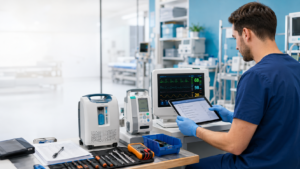
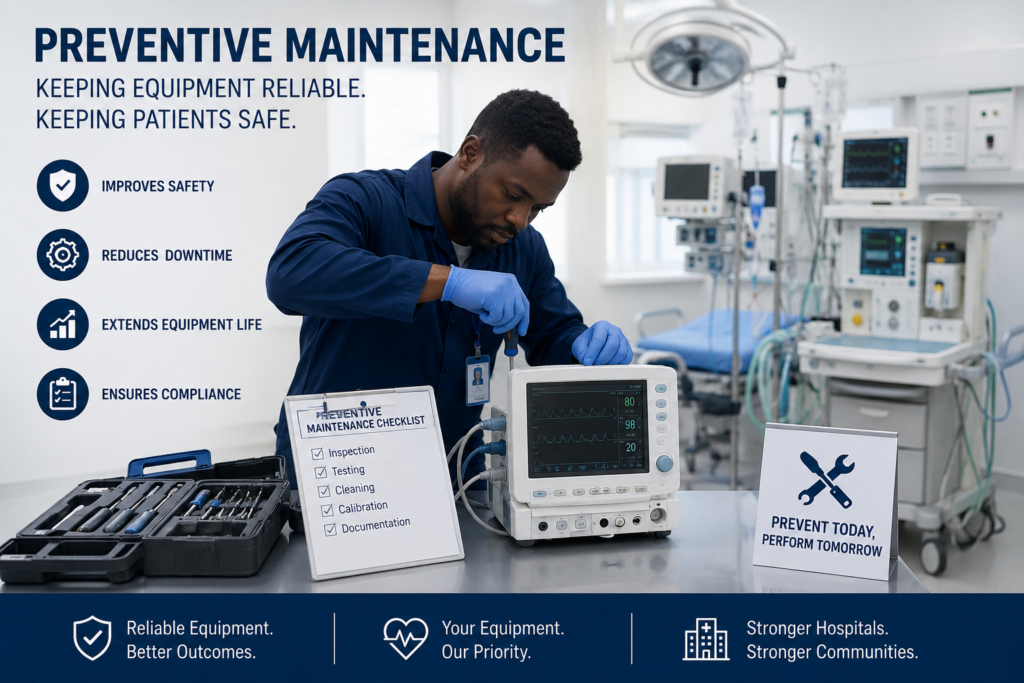
Preventive maintenance is the planned inspection, testing, cleaning, calibration, servicing, and replacement of parts before equipment fails.
Instead of waiting for breakdowns, hospitals schedule maintenance at regular intervals based on manufacturer recommendations and equipment usage.
Examples include:
- Calibrating patient monitors
- Inspecting anesthesia machines
- Testing defibrillators
- Servicing ventilators
- Cleaning ultrasound probes
- Checking infant warmers
- Verifying infusion pump accuracy
- Inspecting laboratory analyzers
This proactive approach keeps equipment performing at its highest level.
The Hidden Cost of Equipment Failure


4
Imagine these situations:
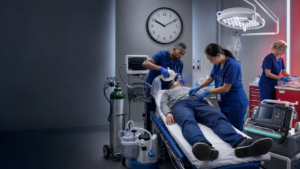
A patient arrives in critical condition, but the defibrillator battery has failed.
An ultrasound machine suddenly stops working during an emergency.
An operating theatre is delayed because the anesthesia machine requires urgent repairs.
A laboratory analyzer produces inaccurate results because calibration was overdue.
These aren’t just technical failures.
They affect:
- Patient safety
- Clinical confidence
- Hospital revenue
- Staff productivity
- Patient satisfaction
- Institutional reputation
Every hour of unexpected downtime costs hospitals far more than routine maintenance ever would.
Five Reasons Preventive Maintenance Is a Smart Investment
1. It Protects Patients
The primary responsibility of every healthcare facility is delivering safe care.
Medical equipment directly influences diagnosis, treatment, surgery, and patient monitoring.
Poorly maintained equipment may:
- Produce inaccurate readings
- Deliver incorrect therapy
- Stop functioning unexpectedly
- Delay emergency interventions
Routine maintenance significantly reduces these risks.
When clinicians trust their equipment, they can focus entirely on patient care.
2. It Extends Equipment Lifespan
Modern medical equipment represents a major capital investment.
Whether it’s:
- Ultrasound systems
- Operating theatre equipment
- Laboratory analyzers
- Neonatal incubators
- Patient monitors
Hospitals expect these systems to serve for many years.
Preventive maintenance:
- Reduces wear and tear
- Detects minor issues early
- Prevents costly component failures
- Maintains optimal performance
The result is a longer equipment lifespan and a higher return on investment.
3. It Reduces Emergency Repair Costs
Emergency repairs are almost always more expensive than planned maintenance.
Unexpected breakdowns often involve:
- Urgent technician call-outs
- Expedited spare parts
- Equipment rental
- Service interruptions
- Overtime staffing costs
In many cases, a small issue that could have been corrected during routine servicing becomes a major repair simply because it was ignored.
Preventive maintenance helps hospitals avoid these unnecessary expenses.
4. It Minimizes Downtime
Equipment that is unavailable is equipment that cannot care for patients.
Downtime can lead to:
- Cancelled procedures
- Delayed diagnostics
- Increased patient waiting times
- Referral of patients elsewhere
- Lost hospital revenue
Routine maintenance dramatically improves equipment availability.
Hospitals remain operational, clinicians stay productive, and patients receive care without unnecessary delays.
5. It Supports Regulatory Compliance
Healthcare facilities are expected to maintain equipment according to manufacturer guidelines and applicable regulatory standards.
Well-documented preventive maintenance demonstrates that equipment is:
- Safe
- Functional
- Properly calibrated
- Regularly inspected
Maintenance records also make accreditation and quality audits much smoother.
Preventive Maintenance Is More Than Repairs
Many people confuse maintenance with fixing broken equipment.
True preventive maintenance includes:
Equipment inspection
Functional testing
Calibration
Electrical safety testing
Cleaning and disinfection guidance
Software updates
Battery replacement
Performance verification
Documentation
Every service visit contributes to safer and more reliable healthcare.
Which Equipment Needs Routine Maintenance?
Nearly every medical device benefits from scheduled servicing.
Common examples include:
- Patient monitors
- Defibrillators
- ECG machines
- Ultrasound systems
- POCUS devices
- Ventilators
- Infant radiant warmers
- Phototherapy units
- Infusion pumps
- Syringe pumps
- Laboratory analyzers
- Centrifuges
- Microscopes
- Operating theatre lights
- Anesthesia machines
- Suction units
- Oxygen concentrators
- Electrosurgical units
If equipment supports patient diagnosis or treatment, it deserves preventive maintenance.
Building a Culture of Reliability
Preventive maintenance isn’t solely the responsibility of biomedical engineers.
Successful hospitals encourage everyone to participate.
Clinicians should:
- Report unusual equipment behavior promptly.
- Avoid using damaged devices.
- Follow proper cleaning procedures.
- Complete daily equipment checks.
- Report missing accessories or worn components.
When clinical teams and biomedical engineers work together, equipment remains dependable and patients benefit.
Why Hospitals Choose Medjet Hospital Supplies Ltd
Reliable healthcare equipment deserves reliable support.
At Medjet Hospital Supplies Ltd, we believe that our responsibility doesn’t end after equipment delivery. We partner with hospitals, county governments, NGOs, and healthcare facilities to help maximize the value of their investment through dependable after-sales support and preventive maintenance guidance.
Our commitment includes:
- Professional equipment installation
- Preventive maintenance planning
- Equipment inspections
- Technical support
- User training
- Genuine accessories and replacement parts
- Responsive after-sales service
Our goal is simple: to help healthcare providers keep critical equipment performing safely, efficiently, and reliably—so they can focus on delivering exceptional patient care.
Final Thoughts
Preventive maintenance is not an expense to postpone—it’s an investment that pays dividends every day. It safeguards patients, empowers healthcare professionals, extends the life of valuable equipment, reduces unexpected costs, and keeps hospital services running smoothly.
For healthcare leaders striving to improve clinical outcomes while managing limited resources, maintaining existing equipment can be just as impactful as purchasing new technology.
At Medjet Hospital Supplies Ltd, we’re proud to support healthcare facilities with quality medical equipment and the expertise needed to keep it operating at its best. Because when equipment performs reliably, healthcare teams perform confidently—and patients receive the care they deserve.
Ready to Protect Your Hospital’s Investment?
Whether you’re equipping a new facility or looking to improve the reliability of your existing equipment, Medjet Hospital Supplies Ltd is here to help.
Contact us today to learn more about our medical equipment solutions and after-sales support services.
📞 0792 220 281
🌐 www.mjhospitalsupplies.co.ke
📧 [email protected]
Order from MJ Hospital Supplies today and get free delivery.
You can also follow us on our: Facebook Page: Mj Hospital Supplies for more updates.
Instagram Page:https://www.instagram.com/medjet_hospital/
Pinterest page: https://www.pinterest.com/mjhospitalsupplies/
Linked in page: https://www.linkedin.com/company/medjet-hospital-supplies-ltd/
Twitter Page: https://twitter.com/medjethospital
https://mjhospitalsupplies.co.ke/ai-is-already-changing-healthcare-is-your-hospital-ready/