
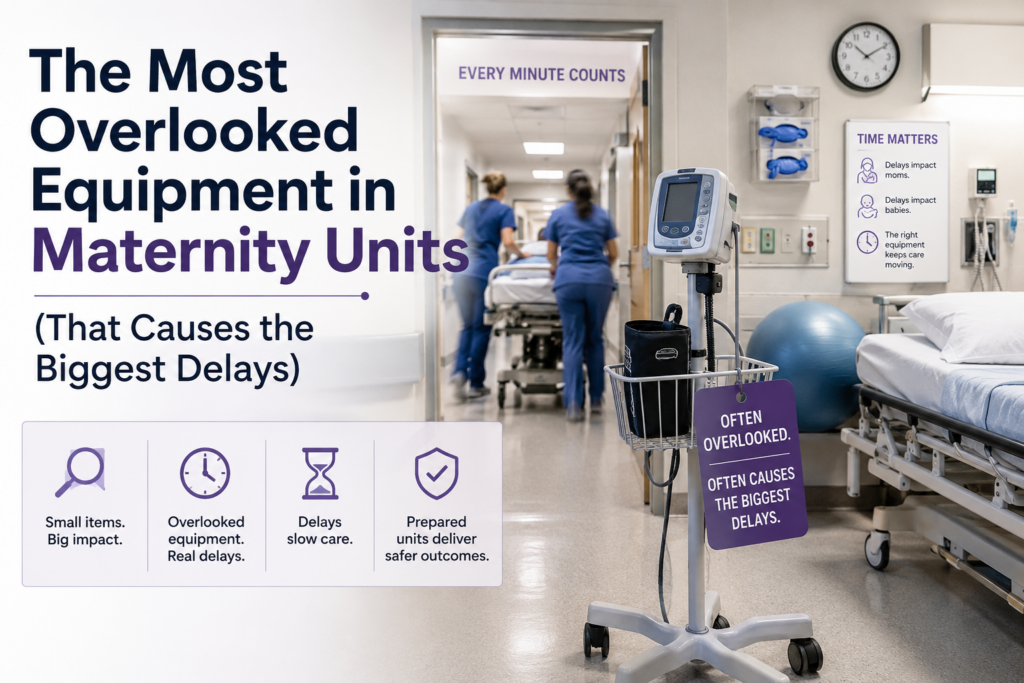
When healthcare administrators discuss maternity unit upgrades, the conversation usually revolves around major equipment such as CTG machines, delivery beds, infant warmers, and incubators.
While these are undoubtedly critical, there is one category of equipment that is often overlooked during procurement and planning discussions—yet it causes some of the biggest delays in patient care.
The surprising culprit?
Patient transport and point-of-care support equipment.
These include emergency trolleys, procedure trolleys, infant bassinets, transport incubators, medicine trolleys, utility carts, and patient transfer stretchers.
Because they are not considered “high-tech” equipment, many facilities underestimate their impact. However, in a busy maternity environment, even a few minutes of delay can affect patient outcomes, staff efficiency, and overall patient experience.
Why Delays Happen in Maternity Units
Maternity care is highly time-sensitive.
A laboring mother may need urgent monitoring. A newborn may require immediate transfer to a neonatal unit. Medication may need to be administered without delay. Clinical supplies must be readily available when emergencies arise.
When support equipment is inadequate, staff often spend valuable time:
- Searching for available trolleys
- Moving equipment between departments
- Waiting for patient transfer devices
- Improvising transport solutions
- Reorganizing supplies during emergencies
These seemingly small delays accumulate throughout the day, creating bottlenecks that affect both patients and healthcare workers.
The Hidden Impact of Inadequate Infant Transport Solutions
One of the most common challenges occurs immediately after delivery.
A newborn may need assessment, monitoring, observation, or transfer to a neonatal care area. Without properly designed infant transport equipment such as baby bassinets or transport incubators, clinical teams are forced to create workarounds.
This can lead to:
- Delayed neonatal assessment
- Increased staff workload
- Reduced workflow efficiency
- Higher risk during patient transfers
The reality is that neonatal care begins long before an infant enters an incubator.
Safe and efficient transport is part of the care pathway.
Emergency Trolleys: The Equipment You Notice Only When You Need Them
In maternity emergencies, every second matters.
Postpartum hemorrhage, fetal distress, neonatal resuscitation, and maternal emergencies require rapid access to medications and supplies.
Yet many facilities operate with poorly organized, insufficient, or outdated emergency trolleys.
When staff must search multiple locations for critical items, response times increase dramatically.
A well-equipped emergency trolley ensures that lifesaving supplies are immediately accessible when they are needed most.
Why Medicine and Procedure Trolleys Matter More Than You Think
Medicine administration and routine procedures happen continuously throughout the day.
Without dedicated trolleys:
- Staff make multiple unnecessary trips
- Supplies become disorganized
- Medication preparation takes longer
- Clinical workflows become inefficient
The result is not just lost time—it is reduced productivity across the entire maternity department.
The Cost of Delays Is Higher Than the Cost of Equipment
Many facilities postpone purchasing support equipment because they prioritize larger capital investments.
However, the hidden cost of operational inefficiency often exceeds the initial investment required for quality support equipment.
Consider the cumulative impact of:
- Staff time lost every shift
- Delayed patient transfers
- Reduced patient throughput
- Increased staff frustration
- Workflow interruptions during emergencies
Over months and years, these inefficiencies can significantly affect departmental performance.
Building a Maternity Unit That Works Efficiently
The most effective maternity units are not necessarily the ones with the most expensive equipment.
They are the units where every component of the patient journey has been carefully considered.
This includes:
- Delivery equipment
- Fetal monitoring systems
- Neonatal care equipment
- Emergency response systems
- Patient transport solutions
- Clinical support trolleys
When all these elements work together, healthcare teams can focus on what matters most—providing safe, timely, and high-quality care.
How Medjet Helps Facilities Eliminate Workflow Delays
At Medjet Hospital Supplies, we work closely with healthcare facilities to identify equipment gaps that may not be immediately obvious but have a significant impact on daily operations.
Our approach goes beyond supplying equipment. We help facilities evaluate their maternity and neonatal workflows to ensure they have the right tools for efficient patient care, emergency preparedness, and neonatal support.
Because in maternity care, success is not determined only by the equipment you have.
It’s also determined by how quickly your team can access it when every minute matters.
Final Thought
The most overlooked equipment in maternity units is often the equipment that staff use every single day.
While incubators and monitors receive much of the attention, support equipment such as transport solutions, emergency trolleys, medicine trolleys, and infant bassinets quietly determine how efficiently a maternity unit functions.
Investing in these essentials may not seem glamorous—but it is often the difference between a smooth workflow and costly delays.
Order from MJ Hospital Supplies today and get free delivery.
You can also follow us on our: Facebook Page: Mj Hospital Supplies for more updates.
Instagram Page:https://www.instagram.com/medjet_hospital/
Pinterest page: https://www.pinterest.com/mjhospitalsupplies/
Linked in page: https://www.linkedin.com/company/medjet-hospital-supplies-ltd/
Twitter Page: https://twitter.com/medjethospital