

Most hospitals track patient numbers, drug usage, and staffing costs.
But there’s one metric that quietly drains revenue, damages trust, and disrupts care—medical equipment downtime.
It doesn’t make headlines.
It doesn’t show up immediately on balance sheets.
Yet over time, it costs hospitals millions in lost revenue, inefficiency, and reputational damage.
Let’s break it down.
What Is Equipment Downtime (and Why It’s Often Ignored)?
Equipment downtime is any period when medical equipment is unavailable for use due to:
- Breakdowns
- Delayed servicing
- Lack of spare parts
- Power or calibration issues
- Operator error due to poor training
Many hospitals treat downtime as “just part of operations.”
That mindset is expensive.
💡 Interactive check:
Think about the last month in your facility.
How many times did a procedure get delayed because a machine was “temporarily unavailable”?
The Hidden Revenue Loss Hospitals Rarely Calculate
1. Cancelled or Delayed Procedures
When a critical machine goes down:
- Imaging slots are missed
- Surgeries are postponed
- Patients are referred elsewhere
Each delay = lost billing opportunity.
👉 A single idle CT, X-ray, or ultrasound machine can cost a hospital hundreds of thousands per month in unrealized revenue.
2. Patient Leakage to Competitors
Patients don’t wait forever.
If diagnostics or treatment can’t be done today, they go to:
- A neighboring hospital
- A private imaging center
- A competitor with reliable equipment
Most don’t come back.
📉 Downtime today = long-term patient loss.
3. Increased Operational Costs
Downtime doesn’t mean spending stops. In fact, costs often rise:
- Emergency repairs cost more than planned maintenance
- Rush procurement of spare parts
- Outsourced services at premium rates
- Staff idle time still paid for
Cheap equipment with frequent failures becomes the most expensive option over time.
4. Damage to Hospital Reputation & Trust
In healthcare, reliability equals trust.
Repeated equipment failures lead to:
- Frustrated clinicians
- Negative patient reviews
- Reduced referrals from doctors
Once trust is lost, it’s hard—and costly—to rebuild.
Why Downtime Is Worse in 2026 Than Ever Before
Healthcare is changing fast:
- Higher patient expectations
- Tighter regulatory standards
- Increased competition among facilities
- Greater reliance on technology for diagnosis and monitoring
Hospitals that rely on:
- Aging equipment
- Poor-quality imports
- Reactive maintenance
will struggle to stay competitive.
⚠️ Downtime is no longer just an inconvenience—it’s a strategic risk.
The Real Causes Behind Frequent Equipment Downtime
Most hospitals think downtime is “bad luck.”
In reality, it’s usually caused by:
- Buying based on price, not lifecycle value
- Lack of preventive maintenance plans
- No local technical support
- Poor staff training
- Non-compliance with recommended standards
💡 Ask yourself:
Was your last equipment purchase evaluated for long-term reliability or just initial cost?
How Smart Hospitals Are Reducing Downtime (and Protecting Revenue)
Forward-thinking hospitals are shifting their mindset from buying equipment to investing in systems.
What they prioritize:
✅ Certified, standards-compliant equipment
✅ Reliable after-sales support
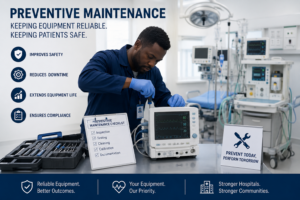
✅ Preventive maintenance schedules
✅ Local availability of spare parts
✅ Staff training & technical backup
The result?
- Higher uptime
- Predictable costs
- Better patient flow
- Stronger financial performance
Downtime Prevention Is a Revenue Strategy
Hospitals that minimize equipment downtime:
- See more patients
- Run smoother operations
- Retain clinician confidence
- Build stronger patient loyalty
In short: uptime equals income.
Final Thought: What’s Your Equipment Really Costing You?
The real question isn’t:
“How much did this machine cost?”
It’s:
“How much revenue am I losing every time it fails?”
Hospitals that understand this don’t chase the cheapest option—they choose reliability, compliance, and long-term value.
That’s how sustainable healthcare facilities are built in 2026 and beyond.
Order from MJ Hospital Supplies today and get free delivery.
You can also follow us on our: Facebook Page: Mj Hospital Supplies for more updates.
Instagram Page:https://www.instagram.com/medjet_hospital/
Pinterest page: https://www.pinterest.com/mjhospitalsupplies/
Linked in page: https://www.linkedin.com/company/medjet-hospital-supplies-ltd/
Twitter Page: https://twitter.com/medjethospital