How Hospitals in Kenya Can Avoid Overpaying for Medical Equipment in 2026, medical equipment pricing in Kenya is more complex than ever. With rising import costs, new regulations, and rapidly advancing technology, many hospitals end up paying more than they should—often without realizing it.
Overpaying doesn’t always mean buying the most expensive machine. Sometimes, it means paying hidden costs, choosing the wrong specification, or investing in equipment that doesn’t truly match your facility’s needs.
This guide breaks down practical, real-world strategies Kenyan hospitals can use to spend smarter—not just less—when purchasing medical equipment in 2026.
Why Overpaying for Medical Equipment Is Still Common in Kenya
Before fixing the problem, let’s acknowledge why it happens:
- Limited technical knowledge during procurement
- Pressure to buy “latest” instead of “right”
- Lack of lifecycle cost evaluation
- Dependence on a single supplier
- Poor after-sales agreements
💡 Quick question:
When was the last time your hospital reviewed whether your equipment purchases actually delivered long-term value?
1. Stop Buying Equipment Based on Price Alone
One of the biggest mistakes hospitals make is choosing equipment simply because it’s cheaper—or assuming expensive always means better.
What to do instead:
Evaluate Total Cost of Ownership (TCO), which includes:
- Purchase price
- Installation & training
- Maintenance & spare parts
- Energy consumption
- Expected lifespan
👉 A cheaper monitor that fails in 2 years costs more than a premium one that lasts 7–10 years.
Interactive tip:
Ask your procurement team: “What will this machine cost us over the next 5 years?”
2. Match Equipment to Your Facility Level (Not Aspirations)
Not every hospital needs tertiary-level equipment.
Over-specifying leads to:
- Paying for unused features
- Higher maintenance costs
- Staff struggling with complex systems
Smart approach for 2026:
- Level 2 & 3 facilities: prioritize reliability, simplicity, and service access
- Level 4 & 5 hospitals: invest in scalable, upgrade-ready systems
🎯 The goal is fit-for-purpose, not prestige.
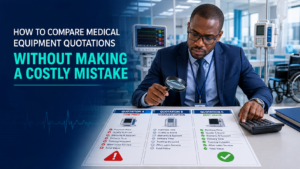
3. Demand Transparent Quotations (No Guesswork)
Many hospitals unknowingly overpay because quotations lack clarity.
A proper quotation should clearly show:
- Equipment specifications
- Accessories included vs optional
- Warranty duration
- Installation & training costs
- After-sales support details
🚩 Red flag: If pricing feels vague or rushed, pause the purchase.
Interactive prompt:
Does your current supplier break down costs clearly—or just give a final figure?
4. Avoid “Emergency Purchases” Whenever Possible
Urgent buying almost always equals overpaying.
In Kenya, emergency procurement often results in:
- Limited supplier options
- Higher prices
- Compromised quality
2026 best practice:
- Forecast equipment needs quarterly
- Replace critical equipment before failure
- Maintain a prioritized upgrade list
📊 Planning ahead = bargaining power.
5. Choose Suppliers With Local Support (Not Just Importers)
A lower purchase price means little if:
- Spare parts take months to arrive
- Engineers are unavailable locally
- Downtime affects patient care
When selecting suppliers, ask:
- Do they have trained local technicians?
- How fast is their response time?
- Are spare parts stocked in Kenya?
🔧 Reliable after-sales support saves more money than any discount.
6. Ask About Upgrade & Trade-In Options
Technology evolves fast. Buying equipment that can’t adapt leads to early replacement.
In 2026, smart hospitals:
- Ask about software upgrades
- Negotiate trade-in programs
- Choose modular systems
This approach protects your investment and prevents future overpayment.
7. Educate Your Procurement Team (It Pays Off)
An informed team makes better decisions.
Encourage:
- Basic technical training
- Vendor comparison sessions
- Collaboration between clinicians & procurement
📚 Knowledge reduces dependency—and unnecessary spending.
Final Thoughts: Spend Smart, Not Small
Avoiding overpayment doesn’t mean cutting corners. It means:
- Buying equipment that truly fits your hospital
- Partnering with transparent, reliable suppliers
- Thinking long-term, not transactional
In 2026, hospitals that procure strategically will deliver better patient outcomes—without budget strain.
Let’s Make This Interactive 👇
- What equipment purchase did your hospital regret the most?
- Which department faces the highest maintenance costs today?
Drop your thoughts in the comments or share this guide with your procurement team—it might save your hospital millions.
Order from MJ Hospital Supplies today and get free delivery.
You can also follow us on our: Facebook Page: Mj Hospital Supplies for more updates.
Instagram Page:https://www.instagram.com/medjet_hospital/
Pinterest page: https://www.pinterest.com/mjhospitalsupplies/
Linked in page: https://www.linkedin.com/company/medjet-hospital-supplies-ltd/
Twitter Page: https://twitter.com/medjethospital