
Mistakes Hospitals Make When Buying Medical Equipment at the Start of the Year (2026 Guide), At the beginning of every year, hospitals and clinics rush to purchase medical equipment. New budgets are approved, expansion plans kick off, and procurement teams are under pressure to deliver fast results. However, this urgency often leads to costly mistakes that affect patient care, staff efficiency, and long-term profitability.
In 2026, smart healthcare facilities are shifting from reactive buying to strategic equipment investment. Below are the most common mistakes hospitals make at the start of the year—and how to avoid them.
1. Buying Equipment Without a Clear Clinical Need Assessment
One of the biggest mistakes hospitals make is purchasing equipment based on trends, peer influence, or vendor pressure rather than actual clinical demand.
What goes wrong:
- Equipment remains underutilized
- Storage and maintenance costs increase
- Budget is wasted on non-essential devices
What to do instead: Conduct a department-by-department needs assessment. Involve clinicians, biomedical engineers, and administrators before making any purchase decisions.
2026 insight: Data-driven procurement is becoming the standard. Facilities that align equipment purchases with patient volume and service demand perform better financially.
2. Choosing the Cheapest Option Instead of Long-Term Value
Price-focused buying may seem smart at the beginning of the year, but it often results in higher costs later.
Hidden costs include:
- Frequent breakdowns
- Limited warranty coverage
- Expensive spare parts
- Short product lifespan
Smart approach: Evaluate total cost of ownership (TCO), not just the purchase price. Reliable equipment with strong after-sales support saves money over time.
At Medjet Hospital Supplies, we guide facilities toward equipment that balances performance, durability, and long-term value.
3. Ignoring After-Sales Support and Technical Backup
Many hospitals focus on delivery speed and forget to ask the most important question: What happens after installation?
Common oversight:
- No local service support
- Long downtime when equipment fails
- Lack of staff training
2026 best practice: Hospitals now prioritize suppliers who offer:
- Installation and commissioning
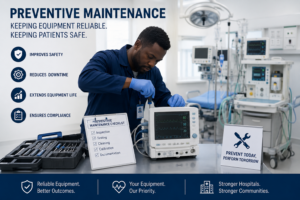
- Preventive maintenance plans
- On-site or fast-response technical support
Medjet partners with healthcare facilities beyond the sale—ensuring continuity of care and peace of mind.
4. Failing to Plan for Scalability and Future Growth
Hospitals often buy equipment that meets current needs but cannot support future expansion.
Examples:
- Imaging equipment that can’t be upgraded
- Patient beds unsuitable for ICU or high-dependency use
- Homecare equipment not adaptable for long-term patients
Think ahead: In 2026, healthcare investment is about scalability. Equipment should grow with your facility, not limit it.
5. Overlooking Compliance and Quality Standards
Purchasing non-certified or poorly documented equipment can expose hospitals to legal and operational risks.
Risks include:
- Regulatory penalties
- Failed inspections
- Compromised patient safety
What to check:
- International quality certifications
- Manufacturer documentation
- Compatibility with local healthcare regulations
Medjet supplies equipment that meets recognized quality and safety standards, helping hospitals stay compliant and credible.
6. Not Training Staff on New Equipment
Even the best medical equipment fails if staff are not confident using it.
Result:
- Misuse and damage
- Reduced efficiency
- Increased safety incidents
Solution: Include training as part of the procurement process. Leading suppliers now integrate user training into equipment delivery.
7. Buying From General Suppliers Instead of Healthcare Specialists
Not all suppliers understand the realities of hospital workflows.
Why this matters:
- Poor equipment recommendations
- Limited clinical insight
- Weak after-sales engagement
Why hospitals choose Medjet: Medjet Hospital Supplies specializes exclusively in medical and homecare equipment. We understand clinical environments, patient safety, and operational efficiency—making us a trusted partner for forward-thinking healthcare facilities.
Final Thoughts: Smarter Buying Is the 2026 Advantage
Hospitals that avoid these common mistakes position themselves for better patient outcomes, smoother operations, and stronger financial performance throughout the year.
As healthcare continues to evolve in 2026, equipment procurement is no longer just a purchase—it’s a strategic decision.
Looking to upgrade or expand your medical equipment this year? Partner with Medjet Hospital Supplies for expert guidance, premium-quality equipment, and dependable after-sales support.
SEO Keywords:
Mistakes hospitals make when buying medical equipment, medical equipment procurement 2026, hospital equipment buying guide, medical equipment supplier in Kenya, premium hospital equipment, Medjet Hospital Supplies.
Order from MJ Hospital Supplies today and get free delivery.
You can also follow us on our: Facebook Page: Mj Hospital Supplies for more updates.
Instagram Page:https://www.instagram.com/medjet_hospital/
Pinterest page: https://www.pinterest.com/mjhospitalsupplies/
Linked in page: https://www.linkedin.com/company/medjet-hospital-supplies-ltd/
Twitter Page: https://twitter.com/medjethospital