
“Height Adjustable Commode Chair” has been added to your cart. View cart
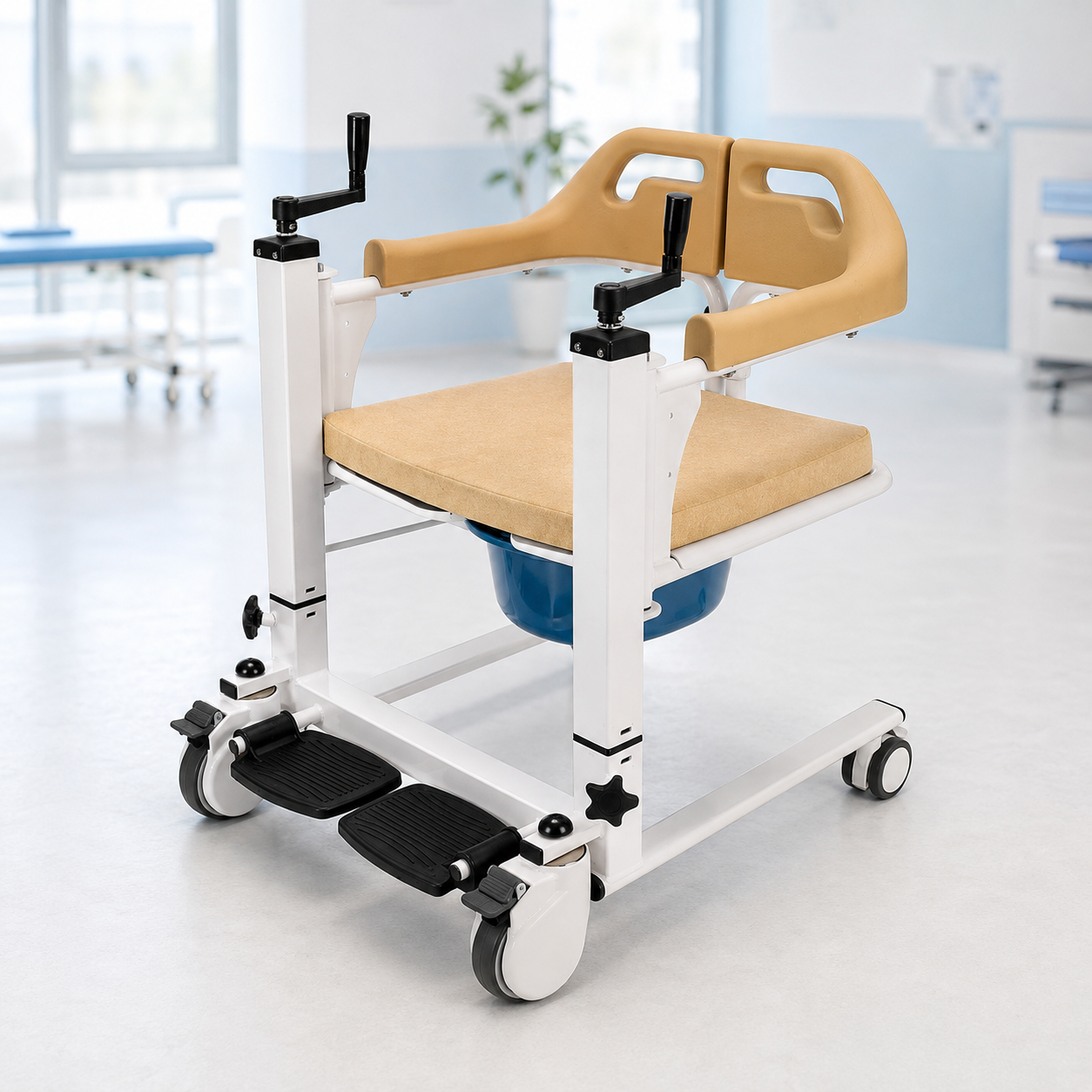
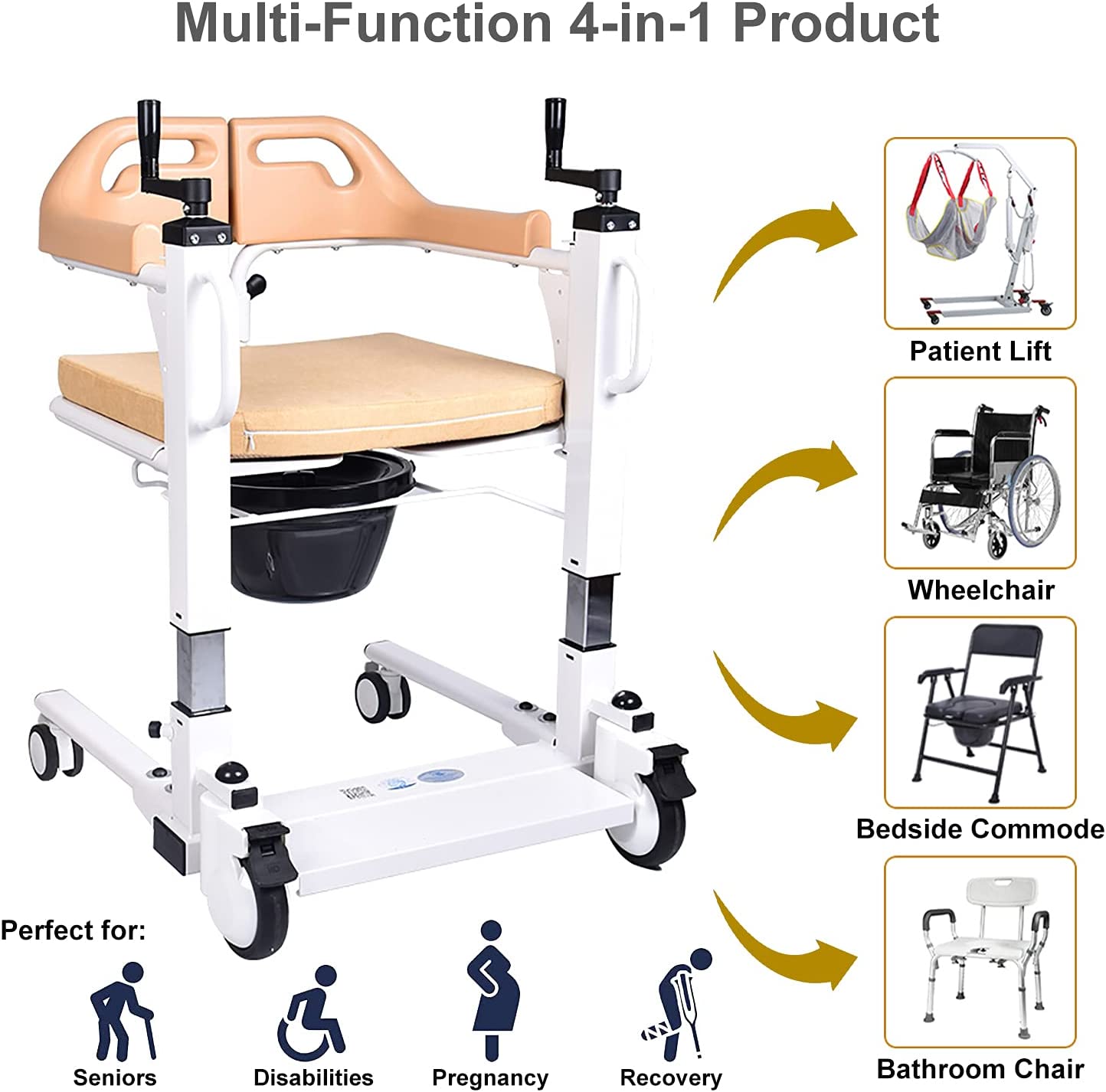
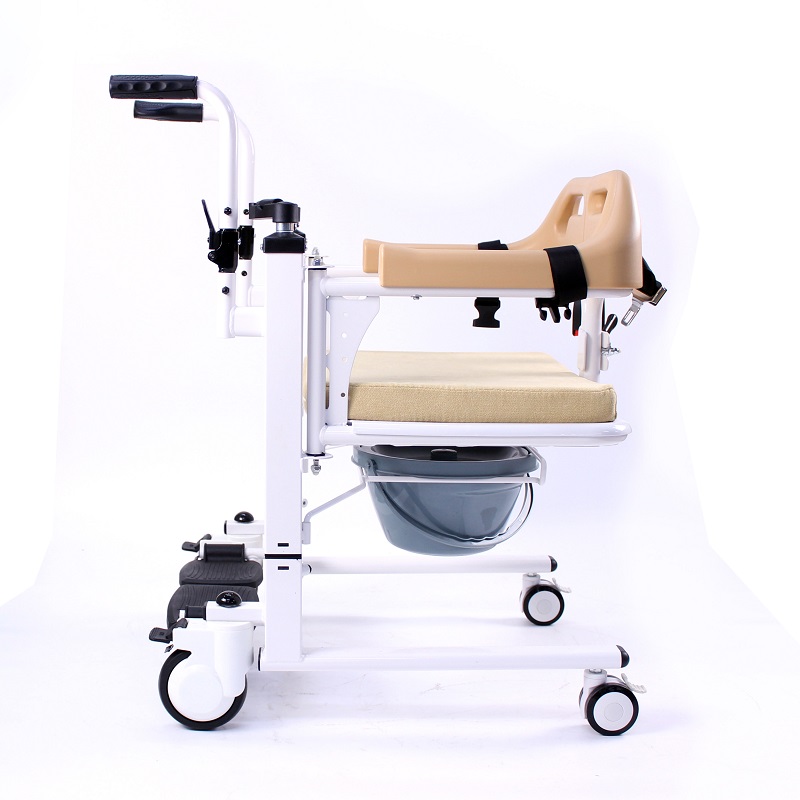
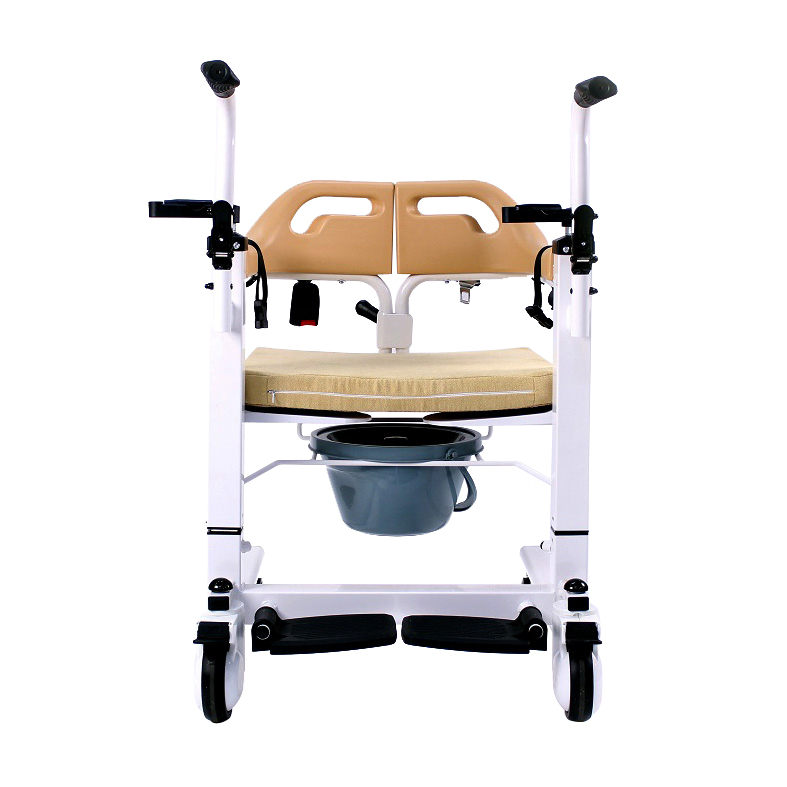
Patient lift Transfer chair
KSh38,000.00
Patient lift transfer chair, How it works
https://www.youtube.com/watch?v=qgm0_5cniOM&ab_channel=kellyyan
Frequently Asked Questions
Can one caregiver operate a patient lift transfer chair?
Some models are designed to reduce the assistance required,
but the number of caregivers needed depends on the patient’s condition,
weight and ability to remain seated.
Follow the manufacturer’s instructions and the patient’s professional care plan.
Can the chair be used as a wheelchair?
It may support short indoor movement,
but it should not automatically
be treated as a standard wheelchair.
Confirm whether the specific model
is approved for transportation
and the distances
for which it can be used.
Is it suitable for toilet transfers?
Many transfer chairs have an opening seat or commode-compatible design.
Check the chair’s dimensions and intended use to
confirm compatibility with the toilet.
Can it be used in the shower?
Only use the chair in wet areas if the manufacturer identifies
it as a shower-compatible model.
Standard models may contain components that can corrode or suffer electrical damage.
What is the difference between a transfer chair and a patient hoist?
A transfer chair supports the user in a seated position,
while a patient hoist usually lifts the person using a sling.
Patients requiring full-body support may be better suited
to a hoist after professional assessment.
How do I choose the correct model?
Consider the patient’s weight, posture, mobility level, transfer locations and required lifting range. It is important to measure doorways, furniture clearance and seat dimensions.
Categories Homecare Equipment, Wheelchairs
Patient Lift Transfer Chair – Safer, Easier Patient Transfers
Moving a person with limited mobility can be physically demanding for caregivers
and uncomfortable for the patient.
A Patient Lift Transfer Chair provides a practical solution
by helping users move safely between a bed, wheelchair, sofa, toilet
or other seated position with less manual lifting.
Designed for hospitals, care homes and home-care environments,
this mobility aid promotes safer handling while helping patients maintain comfort and dignity.
It is particularly useful for elderly people, individuals recovering from surgery
and patients whose medical conditions make standing or walking difficult.
What Is a Patient Lift Transfer Chair?
A patient lift transfer chair is a specialised mobility device designed
to support short-distance movement and seated transfers.
Its lifting mechanism raises or lowers the seat to align with different surfaces,
allowing a caregiver to position the patient without relying entirely on physical strength.
Unlike a conventional wheelchair, this chair is primarily designed to make transfers easier.
Depending on the model and configuration, it may also assist with toileting,
bathing and movement between rooms.
Key Benefits of a Patient Transfer Lift Chair
Reduces Manual Lifting
Repeatedly lifting a patient can expose caregivers to back strain, muscle injuries and fatigue.
The transfer chair reduces the amount of manual handling required,
making everyday care more manageable.
Improves Patient Safety
Transfers between surfaces are common moments for slips and falls.
A stable frame, secure locking system and supportive seat help keep the
patient properly positioned throughout the process.
Preserves Comfort and Dignity
Being lifted manually can feel uncomfortable or distressing.
A controlled transfer provides a more respectful experience
and gives the patient greater confidence during daily care routines.
Simplifies Everyday Care
One device may assist with transfers involving:
- Beds
- Wheelchairs
- Sofas and armchairs
- Toilets
- Shower areas, where the model is approved for wet use
- Examination or treatment areas
This versatility can reduce the need for several separate mobility aids.
Supports Care in Smaller Spaces
The chair’s compact and manoeuvrable design makes it suitable for hospitals,
nursing homes and residential settings. Swivelling castors help caregivers position
it beside commonly used surfaces.
Main Features
Features may vary according to the selected model,
but a quality patient lift transfer chair
may include:
- Adjustable lifting height
- Manual or electric lifting mechanism
- Split or opening seat design
- Strong, corrosion-resistant frame
- Lockable wheels for added stability
- Padded back support
- Safety belt or retaining support
- Footrest for improved comfort
- Push handles for easier manoeuvring
- Commode-compatible design
- Rechargeable battery on electric models
Always confirm the exact specifications,
weight capacity and intended applications before purchase.
How the Transfer Chair Works
The chair is positioned next to the patient’s bed or seat,
with the wheels locked before the transfer begins.
The opening seat sections are carefully placed around the patient
and secured according to the manufacturer’s instructions.
The lifting mechanism then raises the patient into a supported seated position.
After confirming that the seat, safety supports and locks are secure,
the caregiver can move the chair to the required location.
The chair is subsequently lowered
to match the destination surface.
The device should only be operated
by someone who understands
its controls, safety features and transfer procedure.
Who Can Benefit From This Chair?
A patient lift chair may be suitable for:
- Older adults with reduced mobility
- People recovering from surgery
- Patients with lower-limb weakness
- Individuals living with disability
- People requiring assistance with toileting
- Patients who cannot transfer safely without support
- Caregivers responsible for frequent transfers
Suitability should be assessed individually.
Patients who cannot maintain an appropriate seated posture,
have severe involuntary movements or require full-body
suspension may need a different lifting system.
Advice from a physiotherapist, occupational therapist or
qualified healthcare professional is recommended.
Suitable Care Environments
The patient transfer chair can be used in:
- Hospitals and clinics
- Rehabilitation centres
- Nursing and residential homes
- Assisted-living facilities
- Hospices
- Home-care settings
Its combination of patient support and caregiver
convenience makes it a valuable addition
wherever assisted transfers are performed regularly.
Manual or Electric Patient Lift Transfer Chair?
A manual patient lift chair uses a hydraulic, crank or
other manually operated mechanism.
It does not rely on electricity and may be suitable
where transfers are occasional or access
to charging is limited.
An electric patient transfer chair
uses a powered actuator and rechargeable battery.
It offers smoother lifting with less physical effort,
making it particularly convenient for facilities handling frequent patient transfers.
The best option depends on the user’s condition,
transfer frequency, care environment and available budget.
What to Consider Before Buying
Weight Capacity
Choose a chair that safely accommodates the patient’s weight.
Never exceed the manufacturer’s stated maximum load.
Seat Dimensions
Check the seat width and depth to ensure adequate support
without restricting the patient.
Height Adjustment Range
The chair must be able to align with the surfaces used most often,
including the patient’s bed, toilet and wheelchair.
Access Under Furniture
Some models require clearance beneath the bed or sofa for the base frame and wheels.
Measure the available space before ordering.
Doorway Width
Confirm that the chair can move through doors,
corridors and other narrow areas within the intended environment.
Braking and Locking System
Reliable castor brakes and secure seat locks are essential for stable transfers.
Hygiene and Maintenance
For toileting or bathing applications, select a model with easy-to-clean,
water-resistant and corrosion-resistant components.
Verify that the chair is specifically approved for the intended use.
Important Safety Guidelines
For safer operation:
- Read the manufacturer’s instructions before use.
- Inspect the frame, seat locks, brakes and lifting mechanism regularly.
- Lock the wheels while loading or unloading the patient.
- Ensure all seat sections and safety supports are correctly secured.
- Keep the patient’s hands and feet away from moving parts.
- Move the chair slowly across level indoor surfaces.
- Do not use the chair on stairs or steep slopes.
- Never exceed the rated weight capacity.
- Arrange routine maintenance for hydraulic or electric components.
A transfer chair reduces handling effort,
but it does not replace proper caregiver training
or professional patient assessment.
Buy a Patient Lift Transfer Chair in Kenya
Improve mobility assistance with a dependable
Patient Lift Transfer Chair in Kenya from Medjet Hospital Supplies.
We provide practical patient-handling equipment for
hospitals, clinics, nursing facilities and home-care users.
Our team can help you compare available models based on lifting mechanism,
patient weight, seat dimensions and intended application.
Contact Medjet Hospital Supplies today for product specifications, availability and a quotation.
Order this Patient lift transfer chair from MJ Hospital Supplies today and get free delivery.
Facebook Page: Mj Hospital Supplies for more updates.
Instagram Page:https://www.instagram.com/medjet_hospital/
Pinterest page: https://www.pinterest.com/mjhospitalsupplies/
Linked in page: https://www.linkedin.com/company/medjet-hospital-supplies-ltd/
Twitter Page: https://twitter.com/medjethospital