
“Patient Monitor 6 parameter” has been added to your cart. View cart
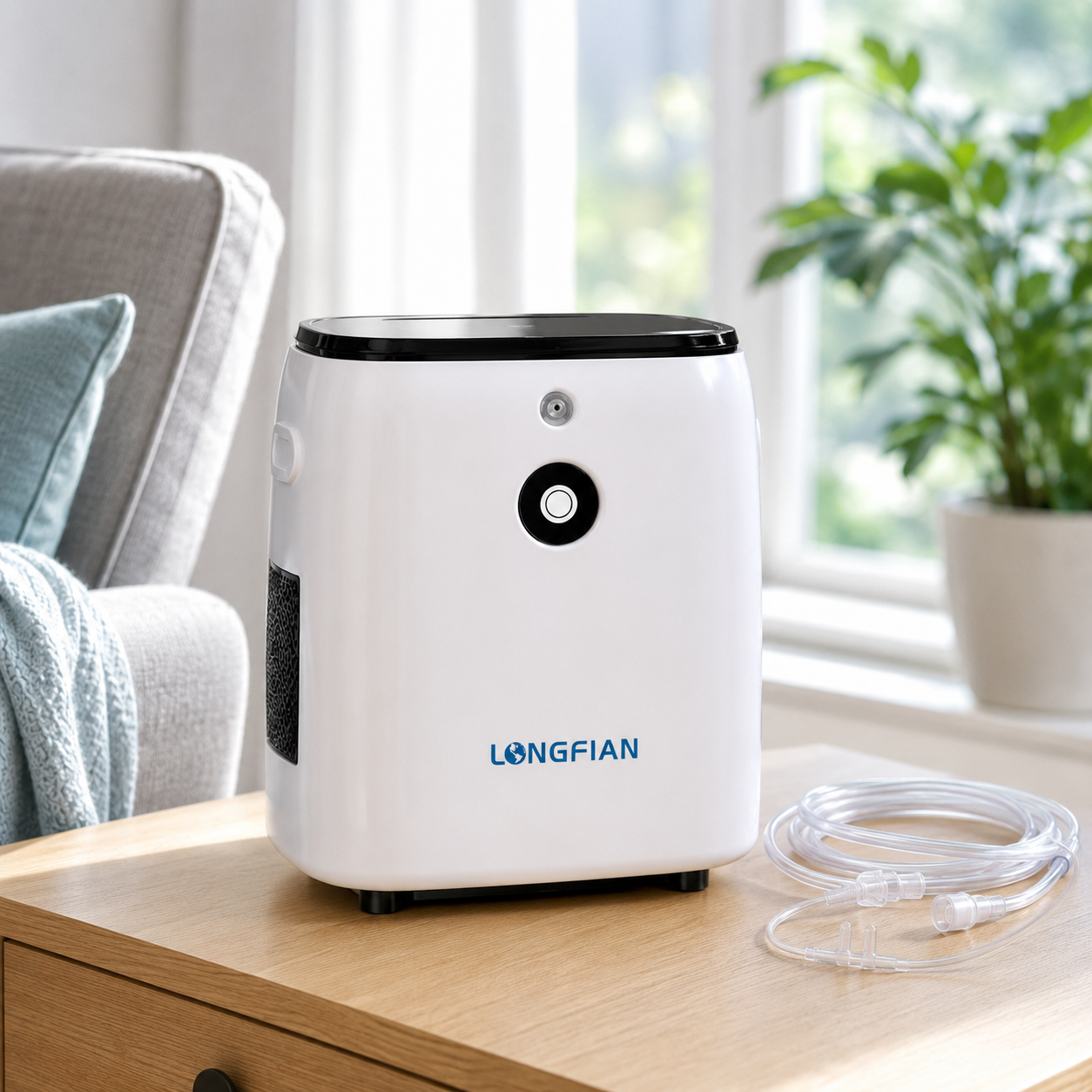


Portable Oxygen Concentrator
KSh70,000.00
How Does an Oxygen Concentrator Work?
Room air contains approximately 21% oxygen, along with nitrogen and other gases.
An oxygen concentrator processes this air through several stages:
- It draws room air into the machine.
- Filters help remove dust and other particles.
- Molecular sieve beds separate nitrogen from the air.
- Oxygen-enriched air collects inside the unit.
- The prescribed oxygen flow reaches the patient through tubing and a nasal cannula or mask.
The machine repeats this process continuously,
eliminating the need to store large quantities of compressed oxygen.
Categories Homecare Equipment, Medical Equipment
Portable Oxygen Concentrator:
Reliable Oxygen Support Wherever Life Takes You
Breathing support should not prevent you from living an active,
independent life. A portable oxygen concentrator
provides supplemental oxygen in a compact,
travel-friendly design, allowing eligible patients to move between rooms,
attend appointments, visit family or travel with greater confidence.
Unlike traditional oxygen cylinders
that store a limited supply of compressed oxygen,
a portable oxygen concentrator draws in surrounding air,
filters out nitrogen and delivers concentrated oxygen to the user.
As long as the unit has a suitable power source or charged battery,
it can continue producing oxygen.
At Medjet Hospital Supplies, we help customers across Kenya
find oxygen solutions that match their prescribed oxygen requirements,
mobility needs and daily routines.
What Is a Portable Oxygen Concentrator?
A portable oxygen concentrator, often abbreviated as POC,
is a lightweight medical device designed to provide supplemental oxygen
while the user is at home or on the move.
It may operate using a rechargeable battery,
household electricity or a compatible vehicle power supply,
depending on the model.
Portable oxygen concentrators may be suitable for
people living with conditions that affect blood oxygen levels,
including certain chronic respiratory or cardiac illnesses.
However, oxygen is a medical treatment.
A qualified healthcare professional should assess the patient
and prescribe the appropriate delivery mode and flow setting.
More Freedom Without Ignoring Your Medical Needs
Living with an oxygen prescription can change everyday routines.
A short trip to the clinic may require additional planning,
while family visits or travel can feel more complicated than before.
A portable concentrator can make these moments easier.
Instead of depending entirely on a large stationary unit
or frequently replacing cylinders, users may enjoy a more
practical source of oxygen during approved activities.
The right device can help you:
- Move more comfortably around the home
- Attend medical appointments with less inconvenience
- Participate in family and social activities
- Reduce dependence on refillable oxygen cylinders
- Travel more confidently when medically cleared
- Maintain oxygen support during selected outdoor activities
A portable oxygen concentrator does not remove the need for careful planning.
Battery duration, prescribed settings, altitude,
power access and backup arrangements must always be considered.
How Does a Portable Oxygen Concentrator Work?
The concentrator takes in ordinary room air,
which contains approximately 21% oxygen as well as nitrogen and other gases.
Inside the machine, a filtration system and
molecular sieve separate much of the nitrogen from the air.
The device then delivers oxygen-enriched gas through a nasal cannula.
This process repeats continuously while the
unit is operating correctly and has sufficient power.
Because the device produces oxygen from the surrounding air,
users do not need to refill it like a conventional oxygen cylinder.
Nevertheless, filters, cannulas, batteries and other accessories
still require correct care and timely replacement.
Pulse-Dose and Continuous-Flow Oxygen Delivery
One of the most important decisions when
buying a portable oxygen concentrator is choosing the correct delivery method.
Pulse-Dose Oxygen Concentrators
A pulse-dose concentrator releases a measured amount of oxygen
when it detects the beginning of a breath.
These machines are often smaller,
lighter and more energy-efficient than continuous-flow models.
However, the numbered settings on a pulse-dose unit do
not automatically equal litres per minute.
Performance also differs between brands and models.
A clinician should confirm that a specific machine can meet
the patient’s oxygen needs while resting, walking and sleeping.
Continuous-Flow Oxygen Concentrators
A continuous-flow unit provides oxygen at a steady rate,
whether the user is inhaling or exhaling.
It may be required by patients whose prescriptions specify
continuous oxygen or who cannot reliably trigger a pulse-dose device.
Portable continuous-flow machines are generally larger
and may consume battery power more quickly.
Their additional size can be worthwhile when
the patient’s clinical requirements demand continuous delivery.
Benefits of a Portable Oxygen Concentrator
Compact and Easier to Carry
Many portable models are designed with handles, shoulder bags or wheeled carts.
This makes them more convenient for daily mobility than large stationary concentrators.
Rechargeable Battery Operation
A rechargeable battery allows the device to operate away from a wall socket.
Some models support additional batteries for longer trips.
Actual battery duration varies according to the oxygen setting,
battery condition, breathing rate and device model.
No Routine Cylinder Refilling
A concentrator produces oxygen from ambient air.
This can reduce the inconvenience of arranging frequent cylinder refills,
although a backup oxygen plan may still be recommended.
Suitable for Home and Mobile Use
Depending on the prescription and device specifications,
a portable unit may support use around the home, at work,
during hospital visits or while travelling.
Relatively Quiet Operation
Modern portable oxygen concentrators are engineered for quieter operation.
Noise levels differ, so check the manufacturer’s specifications
if the machine will be used in quiet settings.
How to Choose the Best Portable Oxygen Concentrator in Kenya
The lightest or least expensive machine is not necessarily the safest choice.
Start with the patient’s clinical requirements, then consider convenience.
1. Confirm the Prescribed Oxygen Requirement
Check the prescribed flow, delivery method and duration of use.
Never reduce or increase an oxygen setting
without instructions from a qualified healthcare professional.
2. Check Pulse-Dose or Continuous-Flow Capability
Confirm whether the patient can use pulse-dose oxygen
or requires continuous flow. This distinction can significantly
affect the machine’s size, weight and battery life.
3. Consider Weight and Portability
A device may be described as portable but still feel heavy
to an elderly patient or someone with limited strength.
Consider whether the user will carry it,
place it on a trolley or receive assistance.
4. Compare Battery Performance
Ask how long the battery is expected to last at the
patient’s prescribed setting—not only at the lowest setting.
If the user spends long periods away from electricity,
consider spare-battery availability and charging time.
5. Review Oxygen Concentration and Performance
Choose a device from a dependable supplier and review its stated oxygen concentration,
operating range, alarm system and maintenance requirements.
6. Check Power and Charging Options
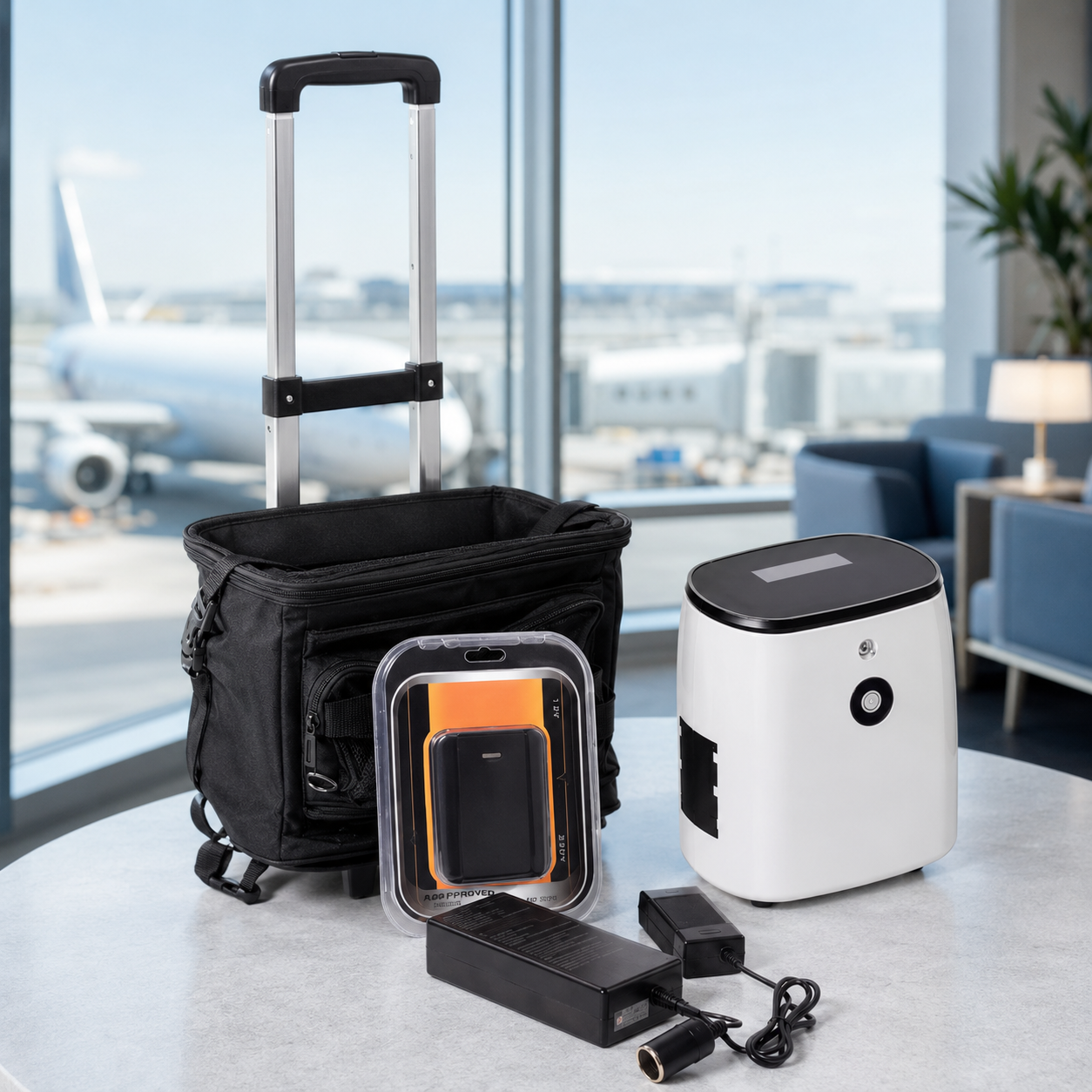
Confirm whether the package includes an AC power adapter,
compatible vehicle charger and rechargeable battery.
For areas with unreliable electricity,
discuss backup power and emergency oxygen arrangements.
7. Consider Maintenance and Local Support
Access to filters, cannulas, batteries,
servicing and technical support is essential.
A machine only remains dependable when it is used and maintained correctly.
Can You Travel by Air With a Portable Oxygen Concentrator?
Some portable oxygen concentrators are approved
for use aboard commercial aircraft,
but approval depends on the exact device and airline requirements.
Before flying:
- Consult the patient’s doctor
- Confirm that the specific POC model is accepted by the airline
- Notify the airline well before departure
- Carry the required medical documentation
- Pack enough charged batteries for the journey and possible delays
- Keep batteries protected according to airline safety rules
- Confirm oxygen arrangements at the destination
Do not assume that every portable concentrator is
flight-approved simply because it is small or battery-powered.
Using a Portable Oxygen Concentrator Safely
Oxygen supports combustion,
which means materials can ignite more easily in an oxygen-rich environment.
For safer use:
- Keep the concentrator away from cigarettes, flames and sparks
- Do not smoke near the machine or oxygen user
- Keep air inlets and outlets unobstructed
- Operate the unit in a well-ventilated area
- Avoid placing it under blankets or inside enclosed spaces
- Use only compatible batteries, chargers and accessories
- Clean or replace filters according to the manufacturer’s instructions
- Keep the unit dry and protected from excessive heat
- Pay attention to alarms and indicator lights
- Maintain a backup plan for power cuts, equipment faults and emergencies
If the patient develops severe breathlessness, chest pain, confusion, bluish lips
or other alarming symptoms, seek urgent medical assistance.
Do not rely solely on the concentrator during a medical emergency.
Portable vs Stationary Oxygen Concentrator
| Feature | Portable concentrator | Stationary concentrator |
|---|---|---|
| Primary purpose | Mobility and travel | Regular home or facility use |
| Size | Compact and transportable | Larger and heavier |
| Power | Battery and/or mains power | Primarily mains electricity |
| Oxygen delivery | Pulse dose, continuous flow or both | Commonly continuous flow |
| Battery operation | Usually available | Usually unavailable |
| Typical capacity | Model-dependent | Often supports higher continuous flow |
| Best choice for | Eligible mobile users | Patients needing regular oxygen at home |
Some patients benefit from using a stationary concentrator
at home and a portable model when going out.
The correct setup depends on the prescription and individual lifestyle.
Why Buy a Portable Oxygen Concentrator From Medjet Hospital Supplies?
Choosing oxygen equipment is not an ordinary purchase.
The machine must suit the patient—not merely look convenient in a product catalogue.
Medjet Hospital Supplies supports individuals, caregivers, clinics and hospitals
looking for dependable portable oxygen concentrators in Kenya.
Our team can help you compare essential factors such as delivery mode,
oxygen settings, battery capacity, portability and accessory availability.
When you contact us, have the patient’s prescription
or recommended oxygen requirement available.
This allows us to guide you toward a more appropriate option.
Order a Portable Oxygen Concentrator in Kenya
Looking for a portable oxygen concentrator for home use, mobility or travel?
Speak with Medjet Hospital Supplies for product availability, specifications and pricing.
Contact us today to request a quotation or
receive help choosing a portable oxygen machine
that meets the patient’s prescribed needs.
Frequently Asked Questions
What is the price of a portable oxygen concentrator in Kenya?
The price depends on the brand, oxygen delivery mode, flow capability,
battery capacity, weight and included accessories.
Contact Medjet Hospital Supplies for current options
and a quotation suited to your requirements.
Does a portable oxygen concentrator need refilling?
No. It draws in surrounding air and separates nitrogen
to produce oxygen-enriched gas. However,
it needs electricity or a charged battery to operate.
Can I use a portable oxygen concentrator at home?
Yes, if the machine meets the patient’s prescribed oxygen requirements.
Some people use a portable unit as their primary device,
while others use it alongside a stationary concentrator.
How long does the battery last?
Battery life varies between models and is affected by
the selected setting, battery age, breathing pattern and environmental conditions.
Always check expected performance at the prescribed setting.
Can a portable concentrator run throughout the night?
Some models may support overnight use,
but suitability depends on the delivery method,
the device’s breath-detection capability and the patient’s prescription.
Obtain clinical guidance before using a pulse-dose unit during sleep.
Is a portable oxygen concentrator better than an oxygen cylinder?
Neither option is universally better. Concentrators can produce oxygen without refilling,
while cylinders operate without electricity and may serve as emergency backups.
The best choice depends on the patient’s clinical needs and circumstances.
Can I buy a portable oxygen concentrator without a prescription?
Availability rules may differ, but oxygen should only be used following a
professional medical assessment.
Incorrect oxygen delivery can be unsafe and may delay appropriate treatment.
Order this Portable from MJ Hospital Supplies today and get free delivery.
You can also follow us on our: Facebook Page: Mj Hospital Supplies for more updates.
Instagram Page:https://www.instagram.com/medjet_hospital/
Pinterest page: https://www.pinterest.com/mjhospitalsupplies/
Linked in page: https://www.linkedin.com/company/medjet-hospital-supplies-ltd/
Twitter Page: https://twitter.com/medjethospital