
“Portable Nebulizer” has been added to your cart. View cart
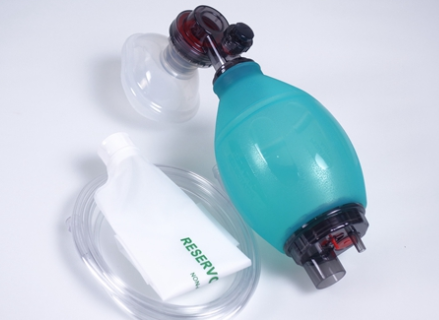
Manual Resuscitator
KSh4,000.00
Why Choose Our Manual Resuscitators?
-
🔹 CE and ISO Certified
-
🔹 Ergonomic Design for Easy One-Hand Operation
-
🔹 Compatible with standard oxygen tubing and masks
-
🔹 Lightweight and portable for field use
-
🔹 Affordable, reliable, and ready to use
Manual Resuscitator – Dependable Ventilation Support When Every Breath Matters
A Manual Resuscitator, commonly known as a
bag-valve-mask (BVM) resuscitator or Ambu-type bag,
is an essential emergency device used to provide
positive-pressure ventilation to a patient who is not
breathing or whose breathing is inadequate.
By manually compressing the self-inflating bag,
a trained healthcare provider can deliver air—or oxygen
when connected to a suitable oxygen source—
into the patient’s lungs.
Designed for rapid deployment, the manual resuscitator is an
important addition to hospitals, ambulances, maternity facilities,
emergency departments, operating theatres, intensive care units
and first-response kits.
Immediate Respiratory Assistance
During a respiratory emergency, equipment must be accessible,
responsive and straightforward to operate.
The manual resuscitator does not depend on electricity,
making it especially valuable during patient transportation,
power interruptions and emergencies outside
fully equipped clinical environments.
Its compact design allows healthcare professionals to
begin ventilation quickly while preparing the patient for
advanced respiratory support or transfer to an
appropriate care facility.
How Does a Manual Resuscitator Work?
The device typically consists of a compressible self-inflating bag,
a non-rebreathing valve and a patient mask.
When the operator squeezes the bag, air or oxygen is directed
through the valve and into the patient’s airway.
As the bag is released, it automatically expands
and refills in preparation for the next ventilation.
A properly selected mask should create
an effective seal over the patient’s nose and mouth.
Correct positioning, ventilation technique and
patient monitoring are essential to achieve safe and effective results.
Key Features
- Self-inflating bag for dependable manual ventilation
- Can operate with ambient air or connect to an oxygen supply
- Transparent patient mask to support observation during use
- Non-rebreathing valve that controls the direction of airflow
- Lightweight and portable design for quick emergency response
- Textured bag surface for a secure grip during operation
- Easy-to-connect components for efficient preparation
- Available in adult, paediatric and neonatal sizes
- Compatible with commonly used masks and airway accessories
- Reusable or single-use configurations, depending on the selected model
Why Choose a Manual Resuscitator?
No Electricity Required
The hand-operated design makes the device suitable for
ambulances, emergency trolleys, field settings and
facilities where access to powered ventilation may be
delayed or unavailable.
Fast and Portable
Its lightweight construction makes it easy to carry,
store and position close to areas where
respiratory emergencies may occur.
Suitable for Different Patient Groups
Manual resuscitators are available in
appropriately sized adult, child and infant versions.
Selecting the correct bag and mask size is vital
because ventilation requirements differ between patient groups.
Oxygen-Compatible
When connected to an appropriate oxygen source and reservoir system,
compatible models can deliver oxygen-enriched ventilation.
The exact oxygen concentration achieved depends on factors such as the model,
oxygen flow, reservoir configuration, mask seal and ventilation technique.
Designed for Emergency Readiness
The manual resuscitator can be kept in crash carts,
resuscitation rooms, theatres, wards, maternity units and emergency vehicles,
helping clinical teams remain prepared for unexpected breathing emergencies.
Common Areas of Use
A manual resuscitator may be used in:
- Cardiopulmonary resuscitation
- Emergency and casualty departments
- Ambulances and patient transfers
- Operating and recovery rooms
- Intensive and critical care units
- Maternity and neonatal care areas
- General hospital wards
- Clinics and first-aid stations
- Respiratory emergencies before advanced ventilation becomes available
Available Sizes
Adult Manual Resuscitator
Designed for adult patients and supplied
with an appropriately sized bag and face mask.
Paediatric Manual Resuscitator
Made for children, with components selected
to support their smaller airway and
ventilation requirements.
Neonatal or Infant Manual Resuscitator
Designed specifically for newborns and infants.
Neonatal ventilation requires suitable equipment and
specialised training to reduce the risk of
delivering inappropriate pressure or volume.
Cleaning, Inspection and Maintenance
Reusable manual resuscitators should be
disassembled, cleaned, disinfected or sterilised strictly according
to the manufacturer’s instructions and
healthcare facility’s infection-prevention procedures.
Before use, trained personnel should inspect the bag, valves,
connectors, oxygen tubing, reservoir and mask.
Components showing cracks, stiffness, discolouration,
poor valve movement or leakage should not be used.
Single-use models must not be reprocessed unless
the manufacturer expressly permits it.
Routine equipment checks help ensure that the resuscitator is complete,
functional and ready when urgently needed.
Important Safety Information
A manual resuscitator should only be used by healthcare professionals
or responders trained in airway management and bag-mask ventilation.
Incorrect technique can lead to inadequate ventilation, excessive pressure,
air entering the stomach or other serious complications.
The operator must use the correct patient size,
maintain an effective mask seal and monitor the patient’s response.
Always follow the manufacturer’s instructions,
current resuscitation guidelines and your facility’s clinical protocols.
Order a Reliable Manual Resuscitator
Be prepared to provide essential breathing support wherever an emergency occurs.
Our manual resuscitators offer a practical combination of portability,
straightforward operation and dependable emergency readiness.
Contact Medjet Hospital Supplies today for current prices,
available adult, paediatric and neonatal options,
technical specifications and delivery information.
Frequently Asked Questions
What is another name for a manual resuscitator?
It is commonly called a bag-valve-mask,
BVM resuscitator, self-inflating resuscitation bag
or Ambu-type bag.
Can it work without an oxygen cylinder?
A self-inflating manual resuscitator can generally refill with
ambient air when it is not connected to an oxygen source.
Oxygen-enriched ventilation requires a compatible oxygen connection
and, where applicable, a reservoir.
Is one manual resuscitator suitable for every patient?
No. Adult, paediatric and neonatal patients
require appropriately sized bags and masks.
Always select equipment according to the patient
and the manufacturer’s guidance.
Can a manual resuscitator be reused?
This depends on the model.
Some devices are designed for reuse after approved reprocessing,
while others are strictly single-use.
Check the product label and manufacturer’s instructions
before cleaning or reusing any component.
Where should the device be stored?
It should be kept in a clean,
dry and easily accessible location,
protected from damage and extreme conditions.
Facilities should inspect it routinely and position it
near areas where respiratory emergencies may occur.
Order this Manual Resuscitator from MJ Hospital Supplies today and get free delivery.
You can also follow us on our: Facebook Page: Mj Hospital Supplies for more updates.
Instagram Page:https://www.instagram.com/medjet_hospital/
Pinterest page: https://www.pinterest.com/mjhospitalsupplies/
Linked in page: https://www.linkedin.com/company/medjet-hospital-supplies-ltd/
Twitter Page: https://twitter.com/medjethospital