
“Instrument Tray with Lid” has been added to your cart. View cart
Sale!

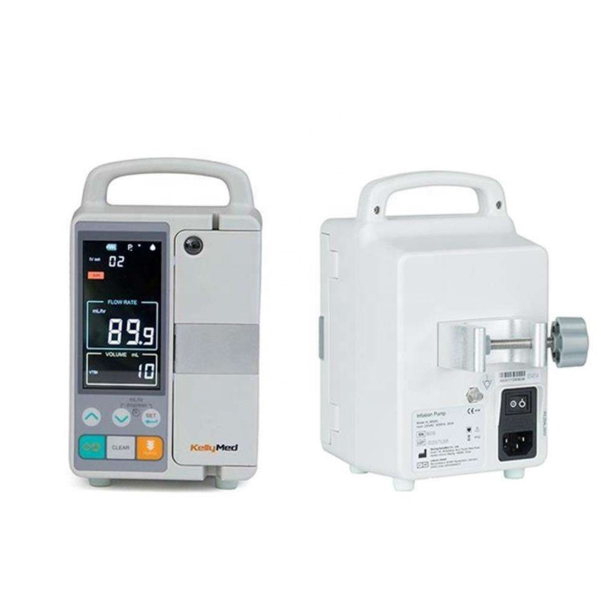
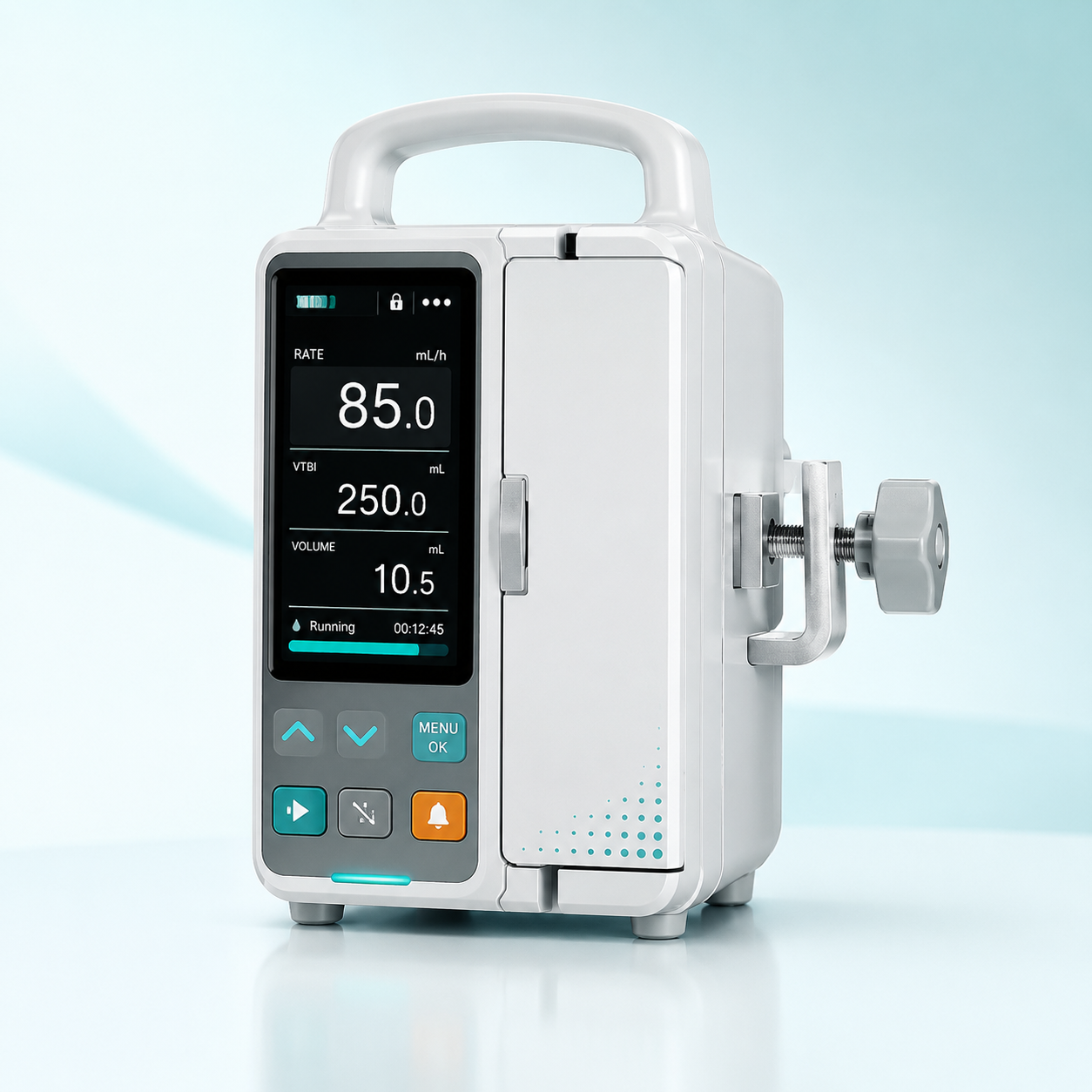
Infusion Pump
KSh85,000.00 Original price was: KSh85,000.00.KSh70,000.00Current price is: KSh70,000.00.
Key attributes
Instrument classification
Class II
Power Source
Electric
Model Number
SP750
Brand Name
CONTEC
Product name
Infusion Pump
Display
2.8” TFT
Color
White
Material
ABS
Infusion Pump for Accurate and Controlled Fluid Delivery
Deliver medications and fluids with greater precision using
a reliable infusion pump designed for hospitals, clinics,
theatres and other patient-care environments.
The pump supports controlled intravenous administration,
helping healthcare professionals maintain the prescribed flow rate
while monitoring the infusion process more effectively.
Unlike gravity-fed infusion, which may be affected by bag height,
tubing resistance and patient movement,
an infusion pump provides more consistent control over fluid delivery.
This makes it a valuable medical device when accuracy,
close monitoring and timely alerts are essential.
Why Choose an Infusion Pump?
Administering intravenous fluids requires more than simply connecting an IV line.
The delivery rate must remain consistent with the clinician’s prescription,
especially when working with medicines or
patients who require careful fluid management.
An infusion pump helps healthcare teams:
- Deliver fluids and medications at a programmed rate
- Improve consistency during lengthy infusions
- Reduce reliance on manual drip-rate calculations
- Monitor infusion progress from a clear control interface
- Receive alerts when operating conditions require attention
- Improve workflow in busy clinical departments
- Support safer and more organised IV therapy
The pump does not replace professional clinical judgement.
It gives trained healthcare providers a controlled and
dependable way to carry out prescribed infusion therapy.
Key Features
Programmable Infusion Delivery
Healthcare professionals can set the required infusion
parameters according to the prescribed treatment.
This allows the pump to regulate delivery over the
intended period while supporting consistent patient care.
Clear Display and User-Friendly Controls
The control panel displays important infusion
information in an easy-to-read format.
Straightforward buttons and menus help trained users configure,
review and monitor the infusion.
Multiple Safety Alarms
The pump is designed to provide audible and
visual alerts when it detects conditions that may interrupt treatment.
Depending on the model, alarms may include:
- Occlusion or increased line pressure
- Air detected in the infusion line
- Empty container or completed infusion
- Open pump door
- Low battery
- Power interruption
- Incorrect setup or operating condition
Alarms must always be investigated promptly by a qualified healthcare professional.
Adjustable Flow Settings
The programmable flow controls allow the
device to support different clinical requirements.
The exact flow-rate range and available infusion modes
vary by model and should be confirmed before purchase.
Mains and Battery Operation
A rechargeable battery can support temporary operation during
patient transfer or a short power interruption.
For extended use, the pump should be connected
to an approved power source according to the manufacturer’s instructions.
Compact Bedside Design
Its compact structure makes the infusion pump suitable
for use beside a patient’s bed, on an approved IV pole
or within departments where efficient use of space is important.
Infusion History and Monitoring
Selected models may store infusion records or
display information such as the programmed rate,
delivered volume and remaining infusion time.
These functions can help clinicians monitor treatment
and maintain organised records.
Suitable Applications
An infusion pump may be used in:
- General hospital wards
- Intensive care and high-dependency units
- Operating theatres
- Emergency departments
- Maternity and neonatal departments
- Oncology and chemotherapy units
- Dialysis centres
- Paediatric departments
- Recovery rooms
- Specialist clinics
- Ambulances and patient-transfer settings, where the model is approved for transport use
Clinical suitability depends on the type of pump,
medication being administered,
compatible consumables and applicable facility protocols.
Common Infusion Uses
Subject to the medicine manufacturer’s guidance and
the healthcare facility’s policies, infusion pumps can assist
with the controlled administration of:
- Intravenous fluids
- Prescribed medications
- Electrolyte solutions
- Nutritional solutions
- Anaesthetic agents
- Antibiotics
- Selected oncology treatments
- Other clinician-prescribed infusions
Only trained personnel should program and operate the equipment.
Infusion Pump vs Syringe Pump
Although both devices support controlled medication delivery,
they are intended for different infusion requirements.
An infusion pump, sometimes called a volumetric infusion pump,
generally delivers fluid from an IV bag or
bottle through compatible administration tubing.
It is often selected when moderate or larger fluid volumes
must be delivered at a controlled rate.
A syringe pump advances the plunger of a fitted syringe
and is commonly chosen for lower-volume medication delivery
where very small flow adjustments may be required.
The appropriate device should be selected according to the prescribed therapy,
required flow rate, fluid volume, patient category and institutional guidelines.
Benefits for Healthcare Facilities
Better Control of IV Therapy
Programmed delivery helps maintain the required infusion rate
and reduces variations that may occur with manual gravity infusion.
Improved Workflow
Once correctly configured and connected,
the pump continuously regulates the infusion.
This allows clinical staff to monitor treatment efficiently
while attending to other patient-care responsibilities.
Enhanced Visibility
On-screen information and alarm notifications
help staff identify infusion status and respond when attention is needed.
Versatile Clinical Use
A suitable pump can support a range of departments,
making it a practical investment for hospitals,
clinics and diagnostic or treatment centres.
Support for Mobile Patient Care
Battery operation may allow an infusion to continue during short patient transfers,
subject to battery condition, clinical supervision
and the manufacturer’s transport instructions.
What to Consider Before Buying an Infusion Pump
Not every pump is suitable for every treatment.
Before placing an order, consider:
- Required flow-rate range and accuracy
- Supported infusion modes
- Adult, paediatric or neonatal application
- Compatible IV administration sets
- Occlusion-pressure settings
- Air-in-line detection
- Alarm functions
- Battery runtime
- Mounting options
- Availability of consumables
- Ease of cleaning and disinfection
- Staff training requirements
- Warranty and technical support
- Calibration and preventive-maintenance needs
Confirming these details helps your facility select equipment
that fits its workflow and intended clinical application.
Cleaning, Inspection and Maintenance
Infusion pumps should be cleaned using products
and methods approved by the manufacturer.
Before every use, staff should inspect the casing,
display, power cable, battery status, pump mechanism and compatible tubing.
Facilities should also maintain a documented schedule for:
- Functional testing
- Preventive maintenance
- Battery checks
- Alarm verification
- Electrical safety inspection
- Accuracy testing and calibration where required
If the pump is damaged, contaminated,
overdue for servicing or producing unexplained alarms,
it should be removed from clinical use and
assessed by qualified technical personnel.
Order an Infusion Pump in Kenya
Equip your healthcare facility with an infusion pump that supports accurate,
efficient and closely monitored IV therapy.
Medjet Hospital Supplies provides medical equipment solutions
for hospitals, clinics, healthcare projects and medical professionals across Kenya.
Contact us to confirm the available model,
technical specifications, compatible infusion sets, warranty, training options, price and delivery arrangements.
Request a quotation today and let our team
help you choose an infusion pump suited to your facility’s clinical needs.
Frequently Asked Questions
What is an infusion pump?
An infusion pump is a medical device that moves fluids,
medicines or nutritional solutions into a patient’s body at a programmed rate.
It is commonly used when controlled intravenous delivery is required.
Why is an infusion pump better than a manual IV drip?
A gravity drip depends on factors such as
bag height, tubing condition and flow adjustment.
An infusion pump actively regulates delivery
and provides monitoring information and alarms.
The most appropriate method depends on the treatment and clinical assessment.
Can an infusion pump be used for children?
Some models can support paediatric applications,
but their flow range, accuracy,
tubing compatibility and safety features must meet
the intended clinical requirement.
A qualified clinician should determine suitability.
Can the pump continue working during a power outage?
Many pumps include a rechargeable battery for temporary backup.
Actual battery runtime depends on the model, battery age,
charge level and operating conditions.
Does an infusion pump detect every problem?
No. Alarm capabilities vary, and a pump cannot
identify every clinical or setup-related issue.
Regular patient observation and line inspection
remain essential throughout treatment.
Does an infusion pump require calibration?
The device should undergo inspection, accuracy testing and
preventive maintenance according to the manufacturer’s recommendations
and the healthcare facility’s equipment-management programme.
Do all infusion pumps use the same IV sets?
No. Some devices require model-specific or manufacturer-approved administration sets.
Using an incompatible set may affect performance and patient safety.
Always verify compatibility before use.
Who should operate an infusion pump?
Only healthcare professionals who have received
appropriate training and understand the device,
prescribed therapy, compatible consumables and
facility protocols should operate it.
Order this Infusion pump from MJ Hospital Supplies today and get it delivered to your doorstep.
Facebook Page: Mj Hospital Supplies for more updates.
Instagram Page:https://www.instagram.com/medjet_hospital/
Pinterest page: https://www.pinterest.com/mjhospitalsupplies/
Linked in page: https://www.linkedin.com/company/medjet-hospital-supplies-ltd/
Twitter Page: https://twitter.com/medjethospital